


Thursday, December 11, 2025


Monday, January 27, 2025
Thursday, November 21, 2024
Sunday, October 27, 2024
Sunday, September 1, 2024
Wednesday, May 8, 2024
Thursday, January 25, 2024
Monday, January 8, 2024
Thursday, December 28, 2023
Sunday, September 18, 2022
Monday, September 6, 2021
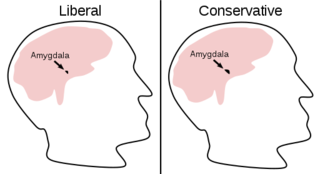
How We Become Liberal or Conservative
Monday, April 28, 2008
How to Pick Who to Vote For
There's no better way to choose which politician to vote for. After all, our system virtually forces a candidate who really want to win to parse, massage, mislead, and even outright lie.
If we replace the blather with relevant deeds, the following facts about Obama come into evidence:
The nonpartisan National Journal rates Congress members' voting records on a scale from 0 (most conservative) to 100 (most liberal.) Obama's voting record scored 100. Is this a man likely to be a uniter not a divider? And if you consider yourself a moderate, can you be comfortable with a man whose voting record is maximally liberal?
Obama and his family, including his children, for 20 years attended the church of Rev. Jeremiah Wright. Obama calls him "His spiritual advisor." He donated thousands of dollars to Wright's church. He named him to one of his presidential campaign committees. All these suggest he condones if not embraces the key themes in Wright's sermons. An ABC News review of dozens of Wright's sermons found "repeated denunciations of the U.S.," most memorably saying "God bless America? No. God DAMN America!" Wright also insisted that the U.S. created the AIDS virus to kill Blacks, that the U.S. brought 9/11 on itself, and that anti-Semite Louis Farrakhan is a great man.
Candidly, I do not follow politics closely enough to responsibly and representatively describe the full range of Obama's, Clinton's, McCain's, or Ron Paul's (Yes, he still is running--Here's his Apr. 28 CNN interview) relevant actions. I offer the above two merely because they're the two most glaring examples I've heard of. I don't mean to imply that there might not be equally important facts about the others.)
I invite you to search out the candidates' relevant behaviors, notably their voting records and examples of effective leadership. To those ends, a good place to start is VoteSmart. (When you get there, scroll down.) I'd also just Google the candidates and avoid sites created by the candidates, the parties, or advocacy groups. Instead, read liberal, conservative, and libertarian sites' reporting, not of what the candidates said, but of what they've done.
How to Save the U.S. from Dying
Peg Tyre, long-time investigative journalist for Newsweek, now doing a project with the New York Times and I were kicking around ideas on how to save
Even the students we already admit to college can't compete with Korea, China, etc-- It's tough for such students to argue that they're worth 300% more money (plus benefits) than Asians. Digging ever deeper into the barrel of high school students is certainly not the answer.
There is no magic answer. This is, as most experts believe,
1. The current cry is, "All students can learn to high standards." Who could argue with that?
Me. I'd much rather have all our students graduate from high school with skills in how to start and run a successful business, resolve conflicts wisely, have financial literacy, information literacy (how to use Google optimally, for example), and great parenting skills (so from Day One, their kids can get good parenting) even if they graduate without knowing quadratic equations, the halide series of chemical elements, and the causes of the Peloponnesian Wars.
2. We need less pluribus and more unum. In nearly every nation in the world, ethnocentrism has led to enmity. The term "assimilation" has acquired a bad name in this country. I think that's a grave error. We should be educating people to be world citizens, with our self-concept a function not of our national identity, race, class, gender, or sexual orientation, but the worthiness of our own actions.
3. Recognizing that money and consumerism really are roots of evil, and educating people that the life well-led usually means spending time less in the pursuit of money and more on doing good.
4. Changing how we select our leaders. All elections should be two weeks long and 100% publicly funded. That would encourage far wiser people to run for office (No four-year campaigns of pressing the flesh) and would avoid their being bought by special interests from the Right and the Left.
Besides, who says

