


Monday, July 21, 2025


Thursday, July 10, 2025
Sunday, July 6, 2025
Friday, June 27, 2025
Thursday, January 2, 2025
Monday, October 14, 2024
Friday, September 13, 2024
Friday, August 23, 2024
Thursday, August 1, 2024
Friday, June 28, 2024
Tuesday, May 7, 2024
Sunday, January 15, 2023
Saturday, October 2, 2021
How to Be a Capitalist in a Changing America
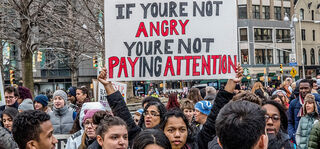
Society’s mind-molders—schools, colleges, news media, and entertainment media—are moving us to believe in a "we not me," community, collective approach to policy and individual behavior.
Yet some people, often cowed by the 3 Cs of Censure, Censor, and Cancel, quietly believe that greater net good accrues from the primacy of the individual and largely free-market capitalism.
Such people believe that the freedom to decide where best to devote their time and treasure will yield more good than surrendering it to the state or even to social pressures. They point to Communist countries, with shortages rife because too many people wouldn’t sustainably work hard when they would get the same pay for doing minimal work.
Pro-capitalist people may support a taxpayer-paid safety net but fear that additional forced redistribution from society’s taxpaying contributors yields a net negative, eating our seed corn. Thomas Sowell wrote, "One of the sad signs of our times is that we have demonized those who produce, subsidized those who refuse to produce, and canonized those who complain."
My Psychology Today article today may be helpful to people who are swimming against the tide.
Monday, September 20, 2021
Quotes on Capitalism: Pro, con, and mixed

Sunday, September 8, 2019
The Case for Socialism and for Capitalism

That's unlikely to be true in the 2020 election. It appears that it will be an election between a heavily socialist person (I’m predicting Warren) and a heavily capitalist person (likely Trump.)
In my PsychologyToday.com article today, I lay out what I believe are best arguments for socialism and for capitalism.
Saturday, July 22, 2017
Privilege? Should We Redistribute More?

Saturday, January 30, 2016
What Will Happen after a Sanders Win...And Why That Scares Me

These are some promises he made in a recent Rolling Stone interview, verbatim. The media is doing a very good job of lending support to those proposals (shown in italics), so here, for balance, after each, I raise my concerns.
A national health care program that guarantees health care to all people.
Because the 29 million currently uninsured are, on average, low-pay high-need, atop of the newly covered people under ObamaCare plus the millions more that will be covered after "comprehensive immigration reform," the following is likely:
- Pay for doctors, physical therapists, registered nurses, etc. will drop because the redistributionist Sanders administration will hold all the cards. That will further increase the already well-documented trend toward early exodus. That will lower quality below its, little-discussed but truly frightening level:
-- One in three patients admitted to a U.S. hospital will experience a medical error. One in three.-- Every year, 350,000 patients die from medical errors in U.S. hospitals alone. Every year. That makes medical errors the third leading cause of death, right behind heart disease and cancer.-- Every day, 10,000 people suffer from unnecessary complications. Every day.
Hard-bargaining by the government will result in lower payments to drug companies and medical equipment suppliers. Yes, that will save money but disincent development of new drugs and equipment.
We may, as a nation, decide that health care is a right. But is it a right for non-payers to get the same level of care as the people who have paid mightily into the system?
Make public colleges and universities tuition-free.
The net impact would be to extend what we do K-12 to K-16. And how's K-12 system working? While we spend #1 per capita in the world on education, we rank near the bottom among developed nations in student achievement. And despite a half-century and literally trillions of dollars specifically to close the achievement gap, it remains nearly as wide as ever. And of course, if the users of colleges (its students) aren't paying but the taxpayer is, is that fair? Plus, if the students have no skin in the game, they have less motivation to pick well let alone do well in college.
We need a massive federal jobs program. We have legislation that I will fight for, which would create up to 13 million jobs.
But we already spend trillions in taxes on infrastructure, etc. Do we truly feel that spending more to provide a job for someone whom no one wants to hire is a worthy use of our hard-earned money?
Raise the minimum wage to a living wage...Whether you're living in some rural area, whether you're living in New York City... $15 an hour is the benchmark we should be shooting for.
The net result will be much less hiring: either through automation or simply not hiring. Many entry-level job seekers simply wouldn't add sufficient value to justify the cost: $15 an hour plus ObamaCare, Social Security, Medicare, Disability, and the costs of employee lawsuits.
Thus many employers would take a loss on each such employee, even if they were perfectly reliable, good learners, excellent communicators, low-maintenance, honest, and never sued the employer. Just as ATMs, electronic tolltakers, and supermarket self-checkout have cost millions of low-pay jobs, the more the minimum wage is raised, the more jobs will be eliminated or automated.
For example, the Washington Post worries that fast-food workers will be early to the chopping block. Already, walk into a Panera, Chili's, Applebys, or Olive Garden, and your "waiter" can be an iPad bolted to your table--no tipping or annoying, interruptive waitperson. Automated baristas and bartenders now threaten to eliminate even those last-resort jobs.
BuzzFeed suggests that even higher-end restaurants will replace chefs with robotic ones--Could we really tell, let alone care, if our salad was made by Roboto than Roberto?
Of course, automation would have continued anyway but doubling the cost of a minimum-wage employee from $7.25 to $15 an hour plus the proportionate benefits must accelerate the job loss. Ironically, that will end up hurting the very segment of the population Sanders professes to care most about.
Also, redistributing that income from business owners to low-end workers takes money from the job creators and innovators to give to people whose spending has less ripple effect. Instead of expanding the business which creates jobs or innovations while providing the nation with better products and services, redistributing money to the poor means the money will more likely be spent on things with low ripple effect.
Who's gonna pay for all this?
On the campaign trail, Sanders talks about taxing "The Billionaire Class." When pushed, he expands to Wall Street and multimillion-dollar inheritances but even that won't come close to paying for his programs.
In fact, a just-released independent report by the Tax Foundation indicates that Sanders' proposals would raise tax revenue over the next ten years by $13.6 trillion, with a projected "net loss of income to the average American (who already is struggling to make ends meet, let alone save enough for retirement or even to pay back student loans) of at least (emphases mine) 12.84 percent."
Sanders proposals that will cost us in non-cash ways
Everybody in this country who is 18 or older would be eligible to vote (without having to register.)
That will result in an electorate less able to vote intelligently and more subject to candidates' manipulative speeches and ads. Will that improve America?
Take marijuana out of the Controlled Substances Act and allow those states – there are four, plus D.C., and others will follow – to do what they wanna do and legalize marijuana.
Marijuana is far more dangerous than the media would have us believe. Per my TIME review of the literature , even the Obama Administration has concluded that marijuana not only damages memory and motivation, it increases risk of serious mental health problems, cancer, cardiovascular disease, and automobile accidents.
Indeed, since legalization in Washington state, pot-related accidents have skyrocketed.
I'd sooner make alcohol illegal than legalize marijuana. Of course, compliance wouldn't be perfect but perfect is the enemy of the good. Prohibition caused a dramatic reduction in alcohol use and the attendant misery to the drinkers, family, coworkers, and car-accident victims.
So what's a person to do?
Even all this couldn't make me vote for Donald Trump but Hillary's proposals are only slightly less leftist as Sanders'. I may just stay home and have a glass of wine.
Tuesday, September 22, 2015
Capitalism is Ending. Now What?

Monday, March 30, 2015
Two Very Different Alternatives to America's Bad Economic Status Quo

The Haves, especially around tax time, are sad at how little they seem to get for paying the lion's share of taxes, and the massive effort required to pay one's taxes--filing all but the simplest returns is extremely complicated.
The Have-Nots, an ever growing percentage of the population, are struggling ever more just to make ends meet.
As I've written ad nauseam, the recovery is a government-and media-perpetrated myth. Yes, a few very rich people and companies are recovering but most people are not.
So I'd fund free group-housing and food for the poor---If dorm living and eating is good enough for Harvard students, it's good enough for those who aren't working. I'd also provide basic health care but not the same level of care available to provided to people who pay for health care.
You protest, "But the incumbent politicians would never allow it--the foxes are guarding the hen house." My approach would be to get the media to urge voters to vote against candidates that oppose a fairer system for selecting our government's leaders.

