Tuesday, April 5, 2011
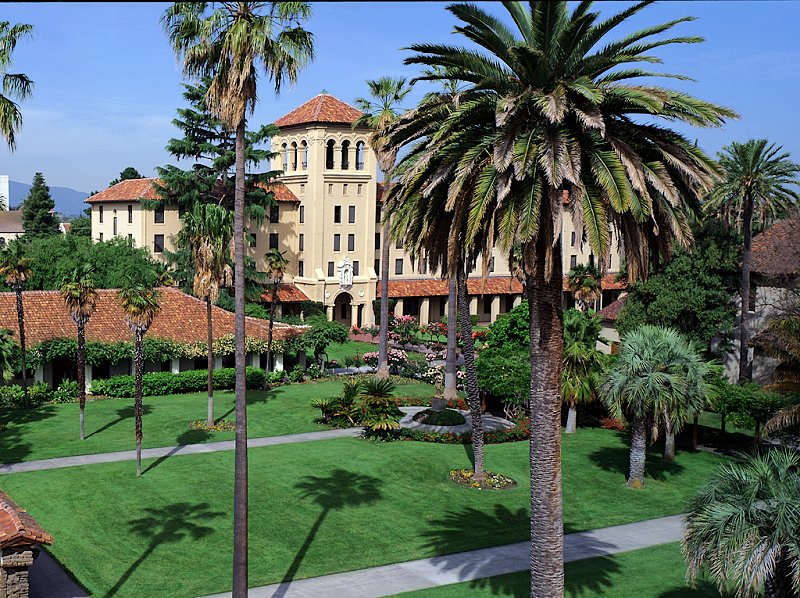
America's Most Overrated Product: Higher Education. (A talk at Santa Clara University)
Crazy U: One Savvy Dad's Experience with College Inc.
Monday, April 4, 2011
A Distillation of Recent Articles on Higher Education's Dubious Value
But higher education's media, marketing, and lobbying machines are prodigious and so I believe this surprisingly sleazy industry will change only if a fully-disclosing College Report Card, prominently placed on each college's website is required for accreditation or by the federal government. I describe such a Report Card HERE.
Even if the U.S. audits the Report Cards for misstatements, as Senator Boxer accuses law schools, some institutions will cheat in reporting the data. Nonetheless, I believe the Report Cards will contain sufficient valid data to empower consumers to more wisely choose a college and, in turn, force the colleges to improve the quality of what they provide for the enormous sums of money, four to eight years of time, and the opportunity cost.
U.S. Senator Calls Law Schools Liars
A few other education consumer advocates and I have long tried to get the media to pay attention, but to no avail. Higher education's PR, marketing, and lobbying machine is second only to the teacher's union lobby.
But finally, there appears to be a glimmer of hope, from a source the media might actually pay attention to: one of America's most liberal senators. See this press release from Barbara Boxer:
BOXER CALLS ON AMERICAN BAR ASSOCIATION TO ENSURE ACCURATE AND TRANSPARENT DATA REPORTING BY LAW SCHOOLS
Recent Reports Suggest Misleading Post-Graduation Employment and Salary Information Used to Skew Influential National Rankings of Law Schools
Washington, D.C. – U.S. Senator Barbara Boxer (D-CA) today called on the American Bar Association (ABA) to improve its oversight of admissions and post-graduation information reported by law schools across the country.
Boxer’s letter follows news reports that have highlighted several law schools allegedly using misleading data to enhance a school’s position in the competitive and influential U.S. News and World Report annual rankings. Such inaccurate post-graduation employment and salary data can mislead prospective students into believing they will easily be able to find work as an attorney and pay off their loans despite a sharp decline in post-graduation full-time employment.
I'll Be on KGO Radio's Ronn Owens Program
In addition to offering advice to callers, the host will likely ask me about under-the-radar careers I'm bullish about, little-known but effective strategies for landing a job in a tough market, how to choose a college, and how to line up a good internship.
Saturday, April 2, 2011
When You Have a Gifted Child Poorly Served By the Public Schools
Sent: Friday, April 01, 2011 9:53 AM
To: mnemko@comcast.net
Subject: Active Smart Boys
I recently read your post Our Most Underserved Students: Active, Smart Boys, and agree with your assumption on this topic. I’m wondering if you can offer suggestions for parents? Our son is consistently at least two years ahead of his classmates in every subject. I home school him part time over the summer, in the afternoons after school, weekends, and breaks. It has been very frustrating for us, however, to see him take almost a “teachers aid” position in the classroom during the day in school every year. He has picked up the rolling pencil on the table, tilting his chair, staring out the window, tapping habits recently this year and this is a bad sign of boredom for the hours he spends at the school. Would it be insulting to the teacher(s) if I suggested he bring in work packets from home to work on after he completes their work?
I scheduled an appointment to discuss this with his teacher. I don’t know how to approach this without causing the teacher to become defensive. Last year the teacher picked on him and called him names throughout the year (if he answered too many questions she would yell at him to stop bragging). So I don’t want to annoy this years teacher.
I look forward to your input,
MJ (I ONLY PROVIDE HER INITIALS TO PRESERVE HER ANONYMITY)
Dear MJ,
5. Perhaps start a one-room schoolhouse for gifted kids, which may not be as difficult as it sounds: I outline how to do that here: http://martynemko.blogspot.com/2011/03/smarter-way-to-start-school.html
When Your Intuition Tells You Not to Ask for More
Conventional wisdom is that many people, disproportionately women, are afraid to ask for what they're worth. I used to believe that, but more recently have concluded that a person's reluctance to charge a higher rate or negotiate for a higher salary may well be a rational appraisal of his or her fair market value, that which the buyer or employer would be willing to pay.
That person may, for example, know that he or she is not that brilliant or hard a worker, or that a person of equal or greater merit could be found at the same or lower cost.
That person may also be considering the likelihood that asking for more money will result in the offer being withdrawn. (Indeed that has happened to my clients and to me--twice, including at CNN.) Especially when, for that person, the real-life value of the extra dollars isn't great, the person may be wise in deciding not to ask for more money--better to have the job for less money than to risk not having it at all.
In sum, don't prematurely dismiss your intuition on how much to ask for. Consider your fair market value and the real-world risk/reward ratio of asking for more, and then decide.