


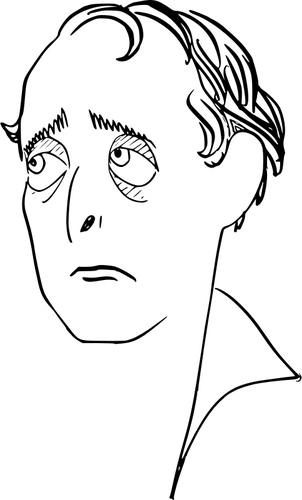
 Of course, no reasonable case can be made for debilitating sadness, let alone for depression.
But our perkiness-valuing society deems even mild sadness to be a
character defect or at least needing of repair: “What’s wrong, Pat?”
Saturday, January 25, 2020
The Case for Sadness: Why happiness may not be all it's cracked up to be
Of course, no reasonable case can be made for debilitating sadness, let alone for depression.
But our perkiness-valuing society deems even mild sadness to be a
character defect or at least needing of repair: “What’s wrong, Pat?”

Saturday, January 18, 2020
Quotes about Work . . . and Counterpoints
 Quotations are more memorable and hence are often more helpful than
are tomes. In an attempt to reduce quotes’ tendency to reductionism, my PsychologyToday.com article today offers a “yes-and” or a “yes-but” for 11 quotations from the eminent.
The Lazy Person's Guide to Growing Roses

The attraction to roses is understandable. In a world that's ever more high-tech, impersonal, and in which some people are ready to pounce if you say the "wrong" word, the peace of mind that can derive from a simple pleasure like rose growing can be appealing, especially now as we're at the year's best time to order and, in warm-winter climates, to plant roses.
But you’re much less attracted to the idea of fancy pruning, frequent feeding, let alone spraying with an arsenal that would have scared Saddam Hussein.
I'm not attracted to that either. I’ve read the frou-frou advice, even attended lectures by rosarians—Yes, that’s actually a term. I’ve even tried some of their methods and after having grown roses, over 200 in total, for 40 years now, I’ve concluded . . . Nah.
Yet I still have nice roses, maximum pleasure with minimal effort. My PsychologyToday.com article today tells how.
Thursday, January 16, 2020
Yes, But: 10 Eminent Philosopher’s Quotes…and their limitations
 Quotations,
especially from the preeminent, can yield much benefit per moment of
reading. To that end, my PsychologyToday.com article today offers 10 such quotations plus my humbly offered
yes-buts, plus one one-liner of my own. They’re presented in
chronological order.
Wednesday, January 15, 2020
Preventing and Ameliorating Counselor Burnout

Tuesday, January 14, 2020
Becoming More Restrained or More Expressive: Should you, and how?

Some of expressiveness or restraint may be genetic
and cultural and resistant to dramatic change but doubtless, some
volition remains. So, in the service of your considering whether to
become more or less expressive, my PsychologyToday.com article today lists restraint’s
and expressiveness’s advantages and then tips for how you might go about
changing.
Tough! Is being intolerant of bad behavior an underappreciated value?

Today’s article aggregates those three: It makes a case for toughness. It's potentially applicable in the widest range of contexts, as the article attempts to demonstrate.
Subscribe to:
Posts (Atom)

