Thursday, February 27, 2014

The End of Jobs...Hurray?


This appeared in the April 2014 edition of the Mensa publication, The Intelligencer.


The End of Jobs…Hurray? 
by Marty Nemko

By now, everyone knows the unemployment rate severely masks the true employment situation. Not only does it not count people who have given up on looking for work, it doesn’t count the underemployed: for example, college-degree holders with jobs that don’t require a degree, or people working part-time/temp when they’d prefer a full-time, secure position.

Ever more jobs are automated. Bank teller jobs have been replaced by ATMs, supermarket cashier jobs by self-checkout, tolltakers by FastTrak. In the face of increased minimum wage and living wage ordinances, robotic fast-food preparers and servers have been developed: custom burger and burrito makers in California, sushi makers in Japan, cookie makers in Poland. The automated barista may replace that failsafe job—Starbucks barista. There’s a robot bookstore clerk and IBM is developing a robot retail clothing clerk.  Many but not all customers will prefer that to the $10 an hour pushy but often incompetent sales clerk. And retail employers will prefer not having to worry about employees taking sick days when not sick, being bad with customers, and/or quitting soon after being trained—turnover in retail is over 100 percent. Bartending jobs are at-risk. I just went to a dance at a venue where the bartender was a machine: stick your credit card in, pick your drink from the screen, and out it comes, just like from a soda vending machine. Leading companies such as Google, FedEx, and Amazon are investing big in driverless vehicles—bye-bye jobs as taxi drivers, truck drivers, bus drivers, even train engineers. Even home-building is at risk. 3D-printers are projected to be able to print homes out of concrete in under a day—bye-bye thousands of construction jobs.
 
And of course, there’s offshoring. While politicians keep urging more Americans to major in a tough science, technology, engineering, or math (STEM) field, ever more of those tech jobs are being offshored, notably to India and China, which have a long tradition of valuing science, math, and technology, and populations many times the size of the U.S.’s. Already, there's an oversupply of STEM graduates. Evidence:THIS  and THIS and THIS and THIS.That can only accelerate as ever more work product can be sent over the internet. Ever more companies are figuring, “Why should I pay American wages plus Workers Comp, Disability, Social Security, ObamaCare, paid family leave, Americans with Disabilities Act compliance costs, plus that of ever increasing employee lawsuits, when I can get someone in Asia for a small fraction of the cost? Are American workers really so superior?”

In a TED talk, Dr. Thomas Frey, Google’s top-rated futurist speaker, projects that, by 2030, half of all jobs worldwide, two billion, will be lost. An Oxford University study projects that half of U.S. jobs will be lost just to automation. One could quibble with the percentage but our job security certainly will be at ever greater risk.

Then what will happen?

It’s easy to project a dystopian scenario: mass unemployment leading to mass destitution, armed robberies, and drug abuse to anesthetize the pain. 

But I thought it would be more interesting here to do a thought experiment in which the end of jobs would actually be a net positive for society.

With fewer people earning good incomes, only companies that provide basic products and services will thrive. That will be good for the environment. For example, car manufacturing will shrink and sell only affordable, economical cars. And people will repair and repair their old vehicles rather than buy new. Even if government takes over the airlines, the cost of planes, fuel, maintenance, and personnel will discourage people from flying. Again, good for the environment.

Also, today’s materialistic society tempts people to cut ethical corners to make more money so they can buy more stuff: new car, nicer clothes and jewelry, fancier vacations, live in 3,000 fancy square feet rather than 1,000 serviceable ones. In an economy in which fewer people are working let alone earning big bucks, materialism would be less core to societal values, reducing those pressures to be unethical.

Plus, with people having more time, more people will replace gratification from “stuff” with gratification from learning, creative arts, and in relationships from mentorship to family to involvement in pro-social organizations: from Rotary to SmileTrain to Mensa.


In the meantime
Even if you have a good job, might this column’s look at the future justify reconsidering your priorities? Yes, perhaps do more to secure your employment: upgrade your skills, work a little harder, build relationships with people who can abet your career, consider starting a business. But might replacing a materialistic lifestyle with a more meaningful one be good preparation not only for a scarce-jobs future but for your current life?

Wednesday, February 26, 2014

Passing the Baton: The Practical and Psychological How-Tos of Succession Planning

 In today's post on AOL, I talk about how to pass the baton. The fancy term is succession planning.

When you leave a job: because you're fired, laid off, off to another job, or retiring, you want to leave a legacy. That's also true when you're selling a business. In this article, I discuss  how to do that: practical advice plus the often difficult psychological issues. 

Tuesday, February 25, 2014

Bah, Foodie Food: The Best-Tasting Foods I've Ever Eaten

I know that many people like trendy food like free-range, sustainably grown, organic grass-fed arugula in a citrus balsamic vinagrette topped with pan-seared sun-dried tomatoes on a bed of whole-wheat bulgar.


Sure, that's healthy but, to my unsophisticated taste buds, most foodie food tastes like doody. 

All right, that's a bit hyperbolic. Let's just say I think it tastes worse than normal food. 

Not to mention, it's expensive and the portions microscopic--It usually works out to about $200 a pound. Lest you think I exaggerate, have you ever been to a restaurant where they serve an appetizer on a vast plate that's empty except for, in the middle, one shrimp? $12.95 for a one-ounce shrimp. That comes to $207 a pound.

To provide a mote of counterbalance to foodie phantasmagoria, here are the best-tasting things I've ever eaten. 

While most are loaded with fat, the consensus is that dietary cholesterol has only modest impact on blood cholesterol, which itself may only modestly increase heart attack risk.  

Calories, however, do count. And most of these yummies have plenty:

1. I love cheese and the best tasting I've ever had, would you believe, is Kraft Cracker Barrel Aged Reserve Cheddar won the gold medal at the World Cheese Competition? I'd give it platinum. And unlike frou-frou cheeses, it's under $4 for 8 ounces and available at any supermarket.

2. Garlic cheese bread. I can't even conceive of anything tastier. Try THIS diet buster.

Simpler variation: a plain 'ol grilled cheese sandwich with tomato or tomato soup. Try making the sandwich with the aforementioned cheddar.

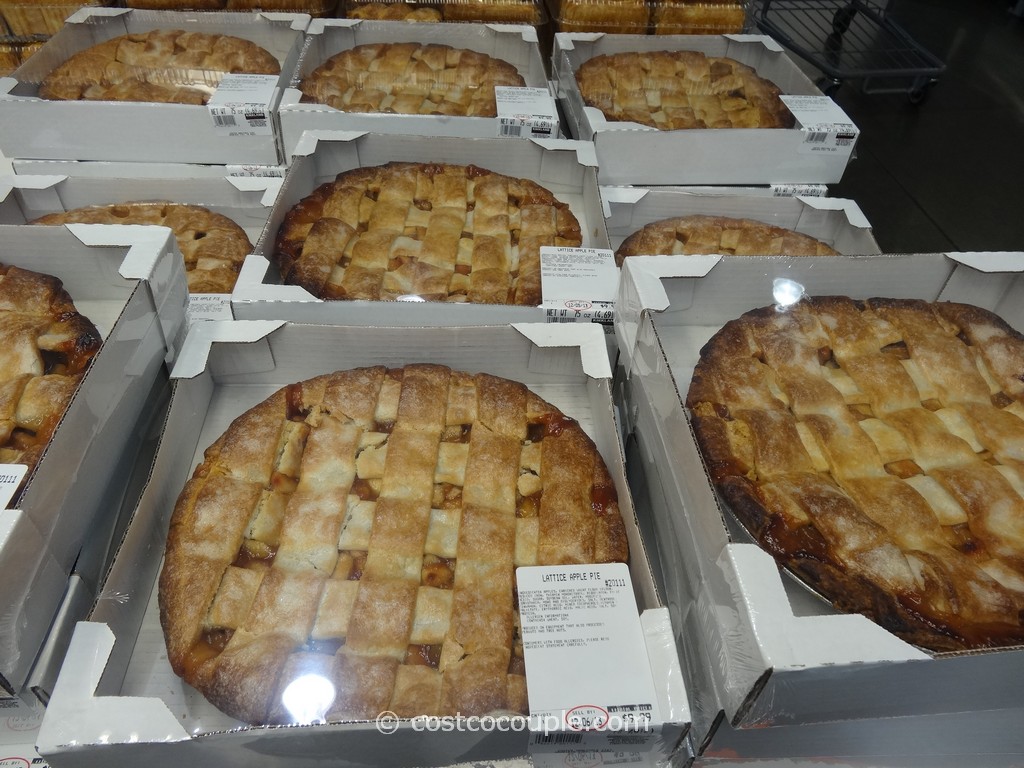
3. Costco apple pie: Better than all the gourmet apple pieces--crisp fresh apples with just the right sweet/tart/cinnamon flavor. $9.99 for a pie that feels as heavy as a bowling ball. Ridiculous bargain.

Of course, it wouldn't be complete without vanilla ice cream. Any will do but I usually go for Breyer's Natural Vanilla. Compared with say, Haagen Daz, it's less sweet, less calorific, is all-natural, and the vanilla bean flecks delude me into thinking it's healthier. See what a health nut I am? Oh and Breyers is less than half the price of those super-"premium," super-priced, super-fattening pints, which are just small enough to tempt me to knock off an entire container in one sitting or standing. (Silly to risk putting that bit back in the freezer, where it would grow ice crystals.)


4. Thai yellow chicken curry at a good hole-in-the-wall restaurant. (You can usually find one on Yelp.) They often use too much fish sauce, a salty brew that drowns out the yummy curry, so ask them to go easy on the sauce, fish sauce, that is.

Now they're saying coconut milk is good for you. If so, does that make this dish, swimming in the stuff, health food?


5. A good croissant. You'd think that a local bakery's would be best but unless you're close to a great patisserie, you won't find any better (or cheaper) than  Costco's: $5.99 a dozen. Or try THESE frozen babies from Trader Joe's. (Only $3.99 for eight minis.)

Or if you want to go sweet, try TJ's also-frozen Kouigns Amanns. They're to die for, hopefully not literally. (Just 3.99 for 4.)

Noting my touting of Trader Joe's and Costco stuff, I feel the need to reassure you that neither TJ's  nor Costco is paying me a penny to swoon over their products. Actually no one has ever offered me a penny to swoon over anything.


6. A crisp Fuji or Jazz apple. Get around the healthiness by enjoying the apple with that Kraft cheddar or your favorite blue cheese. Mine is--you guessed it--Trader Joe's Cave-Aged ($6.99 a pound.)
7. While I'm, for a moment, thinking healthy, I love good corn on the cob. Yeah, I know, it's high in carbs and sugar. Make it worse by bathing it in butter.


8. Last and weirdest, I love sliced bananas in nonfat plain yogurt, perhaps adding cinnamon. At least it's healthy--unless you're a vegan, who insists dairy is death.

Charitable Giving: Principles and Practices of Cost-Effective Philanthropy

As I get older, I think more about the wisest approach to philanthropy, to charitable giving.

I've settled on two basic criteria:

1. Maximal societal benefit for the dollars expended, including ripple effects.
2. Funding something wouldn't otherwise get funded. 

Here are initiatives meeting those criteria that I've funded or considered funding:

A prize
I have written previously about a prize I created. I prefer prize to grant because a prize motivates a number of people to work toward the goal I set. In my case, I set up a prize for the best doctoral dissertation leading to understanding the biological basis of cognitive functioning. I like that topic because while it has great potential to benefit humankind, for sociopolitical reasons, it's difficult today to obtain funding for it.

A challenge prize
Since then, I've considered a perhaps more potent related approach: offering a prize to the individual or group that first meets a specific challenge.  So, taking the above example of trying to further our understanding of the biological basis of cognitive function, I've considered Dr. Richard Haier's suggestion: offering a prize for the first individual or team that is able to predict g (a measure of reasoning ability) based on a brain scan or the person's genome. 

Alas, I don't think I can afford to make the prize big enough to motivate a team to redirect its efforts to that issue. I may yet try it with an affordable amount. If no one meets the criterion for winning it, I've lost only the time and administrative cost of publicizing the prize's availability.

Giving to a political candidate or party
I also thought about donating money to a political party or candidate. We are in an era of growing government power, so donating to a party or candidate could significantly affect the  country's direction. Again, alas, I don't have enough money to move the needle even slightly.

Funding a meritocratic rather than egalitarian cause
My current favorite idea is to fund an after-school and summer program for high-ability (although not necessarily high-achieving) kids who live in a blue-collar or lower-middle-class area. Here's how that idea meets my criteria:

America has moved heavily from merit-based allocation of resources to an egalitarian "redistributive justice" approach. Hence, in the schools, especially the public elementary schools, fiscal and human resources have been reallocated from programs for bright and gifted students to the lowest achievers. Today's priority is to close the achievement gap.

Yet I believe that, ultimately, the greatest societal good will accrue from prioritizing as they say, "the best and brightest." Kids with high cognitive ability (reasoning skills, fast learning ability) are more likely to cure cancer, govern wisely, indeed develop more effective approaches to closing the achievement gap. Just as a triage medic in the battlefield is trained to allocate the most resources not to the sickest but to those with the greatest potential to survive, I feel that allocating significant resources to high-ability students is wise--We all know brilliant failures, people who fail to live up to their considerable potential.

It's probably not optimal for me to fund programs in a high socioeconomic area: The schools have a high-enough percentage of high-ability kids that even mainstream instruction may do an acceptable job of meeting their needs. And wealthy parents have the wherewithal to supplement.

Nor do I feel it's optimal to donate my dollars to the lowest-income areas. There, the problems faced even by their high-ability kids tend to be sufficiently multidimensional and intractable that I fear my dollars wouldn't make the biggest difference. It strikes me--and I'm relying not on data but only my perhaps flawed logic--that my dollars will likely make the biggest difference by focusing on schools with a high percentage of lower-middle class people, especially those with a good percentage of new immigrants who were at least middle-class in their home country.

I'm thinking that the wisest point of entry is a lower-middle-class school district's after-school and summer program. There, egalitarian pressures may be more moderate, although I'm not sure. I plan to investigate.(Update: I've since supported the creation of Camp Think, a summer program in Napa run by one of the district's best teachers.)

Donating time

Of course, one can give charity not just with dollars but with time. I've chosen to make writing--for example, this blog--to be my charity of choice. I like writing and like to think that my posts give significant free help to people--maybe even including this post. 

You
So now we turn to you. Is there anything in this article that makes you clearer about what you might want to donate your money or time to?

A New Idea for a Great and Easy to Create Summer Camp: Camp Think

Here's an advance look at a short piece that will appear in the Mensa publication, The Intelligencer:


Camp Think
by Marty Nemko

There are camps for sports, arts, science, and religion. Why not a camp that focuses on improving thinking skills, a Camp Think?

It could contain such activities as:
  • a camp-wide effort to develop a plan to solve a societal problem, for example, substance abuse. The resulting White Paper could be submitted to an appropriate local, state, and federal official.
  • A debate on such issues as: Should taxes be raised?  Soda banned? Marijuana legalized?
  • Contests: Which team (and/or individual) can make the robot that wins a 20-year dash? A rocket that flies highest with parts that cost under $50? Develop the best idea for a reinvented elementary school? Win a logic-problem quiz show? Create the best skit? Museum exhibit? Develop the best improvement for next year’s camp?
  • Because life isn’t just about thinking, there would be time for songfests, sports, talent shows, storytelling, and yes, even traditional camp arts and crafts--I still fondly remember learning how to make a lanyard using the diamond and box stitches.
None of these require fancy facilities. You could have a small day camp in your home, a spare room in a church, or in your apartment complex’s community room.

If you’re looking for something to do this summer, you could do far worse than run a one- or two-week summer day camp for at least a small number of kids.

How to Control Procrastination: A Compilation of My Best Ideas


Update: For those of you who tried to click on the link below and it didn't work, I believe it's now fixed. Try it again.

A reader, Jeremy Fisher, flattered me by offering to, for free, convert some of my work into ebooks. He started with my writings on procrastination. HERE it is. It is free.

If enough people click on it to justify the time it would take him to assemble additional ones, he's offered to do that. Thank you so much, Jeremy.

And if you have a suggestion for what topic of my writings you'd like to see distilled into an ebook, feel free to suggest that by commenting below.

Saturday, February 22, 2014

In Search of Paradox


Update: 3/31/14:  Today, this article was  published on PsychologyToday.com.

I'm reading the book, What Should We Be Worried About?: Real Scenarios that Keep Scientists Up at Night. It consists of 100 top scientists' few-page explication of their greatest fear.

One of those essays, Amanda Gefter's, made me stop reading to write this blog post. It raised an issue that will change the way I think about how to identify and solve problems.

It touts an approach to research: identify a paradox and try to explain it. The example she used was in basic physics, of which I know little. So here, I try to apply that method to a field I know something about: human behavior, especially as it pertains to career, education, and health.

Here are four such paradoxes and a proposed resolution for each. I believe they stand up logically and thus warrant empirical study.

Sometimes, we're motivated more by criticism than by praise.

One of educational psychology's core principles is to emphasize praise over criticism. The theory is that praise gives feedback and builds self-esteem and thus motivates the recipient to repeat the praised behavior and to make further efforts to improve.

Yet how often have we heard that a person took on a challenge only when told, "You can't do that." I recall, for example, a client who said that only when a high school counselor said, "You're not college material," did he decide to work hard at school--he wanted to prove the  counselor wrong.

A possible resolution of the paradox lies in there being a hierarchy of motivators: Yes, praise is a motivator but being told, "You can't" is often stronger. Why? Because it's hard to accept that you're inadequate, a loser. In contrast, praise, while motivating, also engenders complacency. The recipient can't help but relax a bit: "Okay, I'm good enough at least for a while." Perhaps that partly explains why Asians, with a culture that emphasizes self-effacement more than praise, on average, have the lowest self-esteem, even though their average achievement is the highest.

Heart attack victims quickly return to their bad habits

Ninety percent of coronary bypass patients are, within two years, back to their old fat-, smoke-, and/or stress-filled ways.

Perhaps they're not convinced that retaining the changes will significantly-enough delay another coronary event. Or they believe their life is bad enough that even if reverting to their unhealthy behaviors shortens their life, the pleasures would be worth it.

A possible resolution may be for patients, perhaps with the help of a counselor, to ask themselves about each of the above. Consciously considering those could make some patients at least moderate their behavior. Perhaps even more potent, the person might look for reasons to live: the joys of grandparenting, nature, music, work, whatever.

Employers often knowingly hire a worse employee than necessary.

Employers are ever more focused on cost-cutting: reducing training budgets, expense accounts, anything that doesn't directly build the bottom line. Yet in hiring, an enormous expense, they often throw cost-effectiveness out the window. 

The Internet makes it easy to do a worldwide search for the most cost-effective employee. Yet many employers cast a narrow net and worse, too-heavily base hiring on looks, pleasant personality, etc.

The paradox may derive from the fact that, for many hirers, sexual attraction, the drive to feel superior, and/or be liked trumps their caring about the bottom line. The boss loses nothing by cutting expense-account budgets, but hiring the most cost-effective employee often means hiring someone less attractive and sycophantic and who is smarter and harder-working than s/he is.

A partial resolution may reside in making hiring decision-makers aware of that tendency. Of course, that won't work with hirers who, even if so aware, care more about personal gratification than the organization's success. At least a small percentage of that category of hirers might be helped by asking them the foundational and likely guilt-inducing question: Considering what's good for your career, your coworkers, your organization, and for society, how important is your pleasure versus the organization's products and services being better?"

Many people would rather suffer the severe consequences of long-term unemployment than to accept a low-status job.

Many unemployed people whose most recent job was white- or skilled blue-collar won't take a job that is "beneath them." They'd rather be unemployed than, for example, work as a hotel room cleaner. 

Perhaps that derives from their thinking that if they take such a job, they'll be permanently stuck at such a job: They'll come home tired from work and lack the energy to look for a better position. Besides, their resume will indicate that their most recent job is hotel room cleaner. That's unlikely to make their resume rise to the top of the stack for a middle-class job. The resistance may also derive from fear of embarrassment--having to tell spouse, family and friends that they've gone from white-or skilled blue-collar to manual labor.

A possible solution might be to first acknowledge to the person that such worries are understandable but that they may be sufficiently mitigatible to justify taking such a job:
1. Let your supervisor and the hotel general manager know you're eager to be promoted and ask what you need to do to make that likely.

2. Defer posting that low-level employment on your resume for a few weeks. Longer than that gets increasingly dishonest. Use that time pressure to make yourself devote a few hours a week toward finding a higher-level job: 

Contact everyone in your near and distant network, cold-contact employers that are at least one notch higher-level. For example, if you're a room cleaner at a crappy hotel, drop in on the manager at the Ritz-Carlton and ask for a good job but say you're willing even to be a room cleaner: Better to be a room cleaner at the Ritz-Carlton than at a fleabag.

3. Reduce the embarrassment by not telling family and friends about the job or if necessary, explaining only that you've taken an interim job and are working hard to find something better.

Is there a paradox in your field you might try to resolve?
 

blogger templates | Make Money Online