
Showing posts with label classical music. Show all posts
Tuesday, June 13, 2023
Saturday, September 29, 2012
In Praise of Music Posted Online
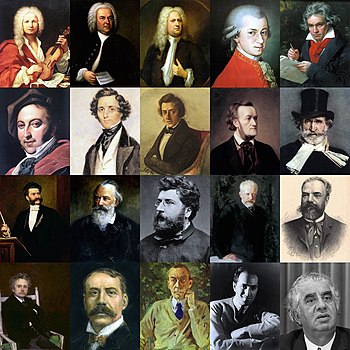
Musical performances on YouTube represent humankind at its finest: gifted musicians spending a lifetime mastering their instrument, coming together to coordinate a masterwork, and then through the miracle of technology, making it available for all of us to see and hear, for free.
Susan Boyle's audition on Britain's Got Talent. This is the most inspirational thing I have ever seen on the Internet. And I suspect that many of the 104 million other people who have watched that video feel the same way.
This is a close second. It's The Hallullejah Chorus as it's never been done before or since.
And this is a close third. You really have to listen to this: Charlotte and Jonathan, also auditioning for Britain's got Talent:
Beethoven's Fifth Symphony, Arturo Toscanini conducting
Hit the Ground Running, Gordon Goodwin's Big Phat Band. I normally don't like jazz solos but listen to Eric Marienthal's sax solo on this.
The Overture to the iconic 1994 Barbra Streisand concert. I believe that overtures are underrated music.
Debussy's Clair de Lune, David Oistraikh, violin, Frida Bauer, piano.
High Iron Mama, Tom Brigham and his band. This is just an audio sample but I really like it and it's very different from everything else in this post, so I decided to include it.
He's the Greatest. John P. Kee and the New Life Choir. I'm an atheist but I find music like this to be an antidepressant...and it has no side-effects.
The Way You Look Tonight, Beegie Adair trio. It's easy to dismiss easy-listening music. I don't. This is a good example of why.
Chopin's Polonaise (Heroic): Evgeny Kissin, piano.
A Few Good Men: Gordon Goodwin Big Phat Band. This contains another amazing solo: Karl Verheyen on guitar. It starts at 1:47.
Beethoven's Piano Trio Op.70 (The Ghost): Emanuel Ax, piano;, Isaac Stern, violin;, Yo-Yo Ma, cello.
Overture to the Fantasticks
The Aria from Bach's Goldberg Variations: Glenn Gould, piano. I think this is the music I'd want playing on my deathbed.
By the way, I highly recommend Klipsch ProMedia 2.1 computer speakers: about $75 used on Amazon.
Susan Boyle's audition on Britain's Got Talent. This is the most inspirational thing I have ever seen on the Internet. And I suspect that many of the 104 million other people who have watched that video feel the same way.
This is a close second. It's The Hallullejah Chorus as it's never been done before or since.
And this is a close third. You really have to listen to this: Charlotte and Jonathan, also auditioning for Britain's got Talent:
Beethoven's Fifth Symphony, Arturo Toscanini conducting
Hit the Ground Running, Gordon Goodwin's Big Phat Band. I normally don't like jazz solos but listen to Eric Marienthal's sax solo on this.
The Overture to the iconic 1994 Barbra Streisand concert. I believe that overtures are underrated music.
Debussy's Clair de Lune, David Oistraikh, violin, Frida Bauer, piano.
High Iron Mama, Tom Brigham and his band. This is just an audio sample but I really like it and it's very different from everything else in this post, so I decided to include it.
He's the Greatest. John P. Kee and the New Life Choir. I'm an atheist but I find music like this to be an antidepressant...and it has no side-effects.
The Way You Look Tonight, Beegie Adair trio. It's easy to dismiss easy-listening music. I don't. This is a good example of why.
Chopin's Polonaise (Heroic): Evgeny Kissin, piano.
A Few Good Men: Gordon Goodwin Big Phat Band. This contains another amazing solo: Karl Verheyen on guitar. It starts at 1:47.
Beethoven's Piano Trio Op.70 (The Ghost): Emanuel Ax, piano;, Isaac Stern, violin;, Yo-Yo Ma, cello.
Overture to the Fantasticks
The Aria from Bach's Goldberg Variations: Glenn Gould, piano. I think this is the music I'd want playing on my deathbed.
By the way, I highly recommend Klipsch ProMedia 2.1 computer speakers: about $75 used on Amazon.
Labels:
big band,
classical music,
ensemble music
Friday, September 21, 2012
Thoughts On Attending a Classical Concert
I was reading Vigilance by Julian Barnes and encountered this: "When you're in a concert hall, having paid money and taken the trouble to go there, you listen more carefully...However the state-of-the-art your system, nothing can compare to the reality of a hundred or more musicians going full tilt in front of you."
That motivated me to, this evening, replace my listening to a CD or YouTube video through my wonderful Klipsch computer speakers with a live concert.
Here are my notes:
I arrive at 7:55 and the orchestra is tuning up and practicing: Cacaphony, loud cacaphony. It's wrong that they should subject an audience to that. Tuning up for a moment is one thing but they should be practiced before they come on stage. I needn't listen to that when I listen to a CD, and that's free and in the comfort of my home. We were subjected to that until 8:10, when the 8:00 concert began.
Another concert ritual I don't understand: Why do the musicians all wear tuxedos, black and white suits, etc? Unnecessarily stuffy if you ask me. Classical music is stuffy enough as it is.
Reading the program reminded me of how academics can destroy even music by overintellectualizing. Here's a quote from the program notes: "Unabashed chinoiserie is heard from the outset, in the form of a pentatonic scale whose properties as a subset of the diatonic and octatonic scales Stravinsky exploited to create an ingeniously shifting polytonal landscape."
The first two pieces on the program were Stravinsky's Song of the Nightingale and Bartok's Dance Suite. As far as I'm concerned, both could be accurately described as interesting but annoying tonalities amorphous. Yet somehow I liked them.
The quality of the orchestra--which consisted mostly of UC Berkeley students--to my professional-pianist ear--weren't that much worse than the professional recordings of those pieces I listened to before I went to the concert. Much credit must go to David Milnes, the conductor, who does have a killer resume.
Listening to the Brahms 4th Symphony reminded me that the classical orchestra is a manifestation of humankind at its finest: 150 people having worked for years to master their instrument, weeks together to coordinate their playing of masterworks, all so we audience members can, for a pittance ($5-$16,) experience all of that live in a beautiful venue, or free on the Net. Speaking of which, here are links to YouTubes of the concert's three pieces, performed by professional orchestras:
Song of the Nightingale (Berlin Radio Orchestra, Lorin Maazel conducting)
Dance Suite by Bartok (Dresden State Orchestra, Bernard Haitink conductor)
Brahms Symphony #4 (Vienna Philharmonic, Istvan Kertesz, conductor)
I came away glad I went and sad that classical music isn't more popular. At the risk of sounding like an old fart and, heaven forbid, a judgmental one at that, most classical music that has stood the test of time, is simply better, yes, better, not just different, than so much of the currently popular music.
That motivated me to, this evening, replace my listening to a CD or YouTube video through my wonderful Klipsch computer speakers with a live concert.
Here are my notes:
I arrive at 7:55 and the orchestra is tuning up and practicing: Cacaphony, loud cacaphony. It's wrong that they should subject an audience to that. Tuning up for a moment is one thing but they should be practiced before they come on stage. I needn't listen to that when I listen to a CD, and that's free and in the comfort of my home. We were subjected to that until 8:10, when the 8:00 concert began.
Another concert ritual I don't understand: Why do the musicians all wear tuxedos, black and white suits, etc? Unnecessarily stuffy if you ask me. Classical music is stuffy enough as it is.
Reading the program reminded me of how academics can destroy even music by overintellectualizing. Here's a quote from the program notes: "Unabashed chinoiserie is heard from the outset, in the form of a pentatonic scale whose properties as a subset of the diatonic and octatonic scales Stravinsky exploited to create an ingeniously shifting polytonal landscape."
The first two pieces on the program were Stravinsky's Song of the Nightingale and Bartok's Dance Suite. As far as I'm concerned, both could be accurately described as interesting but annoying tonalities amorphous. Yet somehow I liked them.
The quality of the orchestra--which consisted mostly of UC Berkeley students--to my professional-pianist ear--weren't that much worse than the professional recordings of those pieces I listened to before I went to the concert. Much credit must go to David Milnes, the conductor, who does have a killer resume.
Listening to the Brahms 4th Symphony reminded me that the classical orchestra is a manifestation of humankind at its finest: 150 people having worked for years to master their instrument, weeks together to coordinate their playing of masterworks, all so we audience members can, for a pittance ($5-$16,) experience all of that live in a beautiful venue, or free on the Net. Speaking of which, here are links to YouTubes of the concert's three pieces, performed by professional orchestras:
Song of the Nightingale (Berlin Radio Orchestra, Lorin Maazel conducting)
Dance Suite by Bartok (Dresden State Orchestra, Bernard Haitink conductor)
Brahms Symphony #4 (Vienna Philharmonic, Istvan Kertesz, conductor)
I came away glad I went and sad that classical music isn't more popular. At the risk of sounding like an old fart and, heaven forbid, a judgmental one at that, most classical music that has stood the test of time, is simply better, yes, better, not just different, than so much of the currently popular music.
Subscribe to:
Posts (Atom)


