
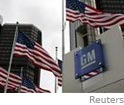
Just what I was afraid of: Obama and the new more liberal congress aren't close to being inaugurated yet and already they want to take more money from working- and middle-class people to bail out those who don't deserve it.
GM, Ford, and Chrysler had a huge headstart--For decades, the industry had virtually no competition. The playing field was unlevel, in their favor. Yet, soon after the Japanese and Koreans started to make cars, the union-strangled U.S. car industry could not compete on the most important standard of all: reliability.
Year after year, Consumer Reports has made clear that American-made cars break down more often than Asian-built ones. No one ever accuses the Japanese of producing Monday-morning cars.
Even if the United Autoworkers Union drives the auto industry to its knees, the union apparently will continue to insist on lifetime job security and mammoth retirement packages despite the workers producing cars that break down more than the competition's.
Of course, it's hardly all the workers' fault. They can only install the parts that are given to them, and, in talking with auto mechanics in repair shops and workers on a GM assembly line, they're convinced that many parts and systems are inferior to many foreign manufacturers'.
And certainly, U.S. auto executives deserve a big share of the blame. Their lust for short-term profits fueled their building building mainly high-profit-margin big cars and SUVs, figuring the materialistic American buyer would stay indifferent to thrift and environmentalism. Meanwhile Asian car makers, especially Toyota, recognized that the world is changing.
And now the Democrats want to reward the U.S. auto industry's bad behavior by propping it up with a massive bailout using our money.
It's fundamental that if you want to improve behavior, you reward good behavior and punish bad. The Democrats know that: they're always arguing that raising taxes on gasoline and on tobacco will reduce their use. Yet now, they want to reward the U.S. auto industry for its bad behavior.
If we hadn't bailed out Chrysler 20 years ago, the auto industry would have felt forced to improve. But the industry knowing that the U.S. government would probably never allow the industry to fail encouraged the automakers and auto workers to feel complacent about continuing their inferior practices.
Another auto industry bailout will only encourage further bad behavior and more inferior cars that can't compete with the Japanese or Koreans. And just imagine what will happen when the newest carmakers on the block, the Chinese, get their act together.
There is a huge hidden cost of bailouts: demotivating the small good guy. If entrepreneurs and small companies see that when a big company screws up, the government views it as "Too Big to Fail" and bails out it, that sends a dispiriting message to the small good guy: No matter how good you'll be, the government won't let you compete. No formula could better strip the U.S. of its historic advantage: the power to innovate.
If we prop up the bad with good people's tax money, it will yield only a short-term feel-good. In the long-run, we will become a bad country.
Yet the government is contemplating ever more bailouts. We've already bailed out the financial industry with uncertain results, are bailing out insurance giant AIG (who then congaed to Vegas for a $350,000 celebration) will soon bail out the auto industry, and rushing up to join the line are four more insurance companies, Citigroup, the airlines, home builders, people who bought houses they couldn't afford, and those who ran up too much credit card debt.
Other short-sighted industry "leaders" are failing too.
- Levitz Furniture insisted on huge showrooms and overpriced low-quality, poorly styled furniture. They're in Chapter 7 (liquidation) bankruptcy. Meanwhile Sweden-based IKEA is doing just fine. Should you and I bail Levitz out?
- How about the nose-diving Circuit City, Best Buy, and Macy's, with their enormous, expensive bricks-and-mortar stores while the world buys online. Should you and I bail them out?
- What about the liberals' darling company Whole Foods, which refused to stop its noble but unrealistic business practices even though that forced it to charge absurdly high prices that most shoppers won't pay. So its stock price has plummeted from 78 to 9 while German-owned Trader Joe's has long checkstand lines filled with happy customers. Should you and I bail out Whole Foods?
- And then there are the cities and states. Here in California, our governor's already got his hand out for a huge bailout.
Under the current "Too Big to Fail" mindset, the conga line for handouts will continue to grow until the taxpayers have been stripped of nearly all their money or there is a tax revolt.
I believe the auto and other struggling industries should be left to fix themselves or die.
What about laid-off workers? I'd encourage the private sector to create excellent online training programs. The entrepreneurial among laid-off workers would be trained on how to start a successful, ethical, and important small business. The not-entrepreneurial would be trained in such sustainable fields as health care, biotech, education, global business, elder care, and law enforcement.
I believe that's a surer road to a sturdy long-term economy than the ever-lengthening, Democrat-led bailout conga line.



 From the Independent Institute:


