


Showing posts with label philosophy of life. Show all posts
Showing posts with label philosophy of life. Show all posts
Sunday, December 15, 2019
Finding Your Personal Philosophy


Saturday, June 30, 2018
Finding Your Foundation

In my PsychologyToday.com article today, I offer questions that may help you develop yours. They’re from my new book, Careers for Dummies.
Wednesday, December 20, 2017
Utilitarianism: A Philosophy to live by?

Wednesday, May 15, 2013
Your Goal Should be Contribution, not Happiness
 This will appear on AOL.com a week from tomorrow but I thought you might like an advance look.
Update: HERE is the link to the article on AOL, and it's been reproduced in a number of outlets including Jim Cramer's The Street, but I like the version below slightly better.
Work-life Balance is Overrated
Your goal should be contribution, not happiness
by Marty Nemko
Most people view life's goal as to be happy. I believe that's misguided.
If the goal is happiness, you could, for example, spend all your time gardening, watching comedies, playing video games having sex, etc. Yet if people did that, the planet would be far worse: patients would die, homes wouldn't get built, the Internet wouldn't have been invented, etc.
Even though Mother Teresa was sometimes far from saintly, she didn't work in the stench of Calcutta streets, ankles bitten by scorpions, because it made her happy. She did so because she realized that helping humankind was far more important than her being happy. Cardiologists who choose to work nights and weekends to keep more patients alive realize their life is more meaningful than if they had opted for the vaunted work-life balance. Even the supposedly lowly payroll clerk who, after the standard work week, takes work home to ensure that everyone is paid accurately and on-time is living a far worthier life than is someone who diverted that time to recreation.
And as I said in my recent interview in Business Insider, contrary to what advocates of work-life balance claim, long work hours do not lead to burnout. Indeed, as long as you're doing work you're good at and believe in, you'll likely be more energized from long work weeks than if you spent the discretionary time playing sports, watching the boob tube, or the current fad, yoga.
I'll be 63 years old next month and, since I was a teen, have worked 60 to 80 hours a week. I cannot claim to be a happy person. Like my father, I believe I'm constitutionally inclined toward mild sadness. But I know that my life has been more worthwhile for having spent workweek hours 40 to 60+ having helped 4,000 career counseling clients, written seven books, over 2,000 how-to and public-policy articles and blog posts, plus myriad other contributions. Yet because we're awake 100 hours a week, there has still been sufficient time to have been happily married for 37 years, the father of a well-adjusted successful child, and to have become a professional-level pianist, an award-winning amateur play director and play sports or hike at least 45 minutes a day, six days a week.
I will continue to work long hours until I drop in the service of things I believe will make the world better. I do want to drop dead at this keyboard. A silly canard is, "No one ever died wishing they spent more time at the office." Indeed, most of the most contributory people I know and I want to work 60+ hours a week as long as possible. That's the main reason CEOs continue working long after they've made enough money to last three lifetimes.
As Isaac Asimov, who had written or edited more than 500 books(!) said when asked, "What would you do if you knew you had six months to live?" He said, "Type faster."
Tuesday, May 3, 2011
Toward the Life Well-Led: The Meter
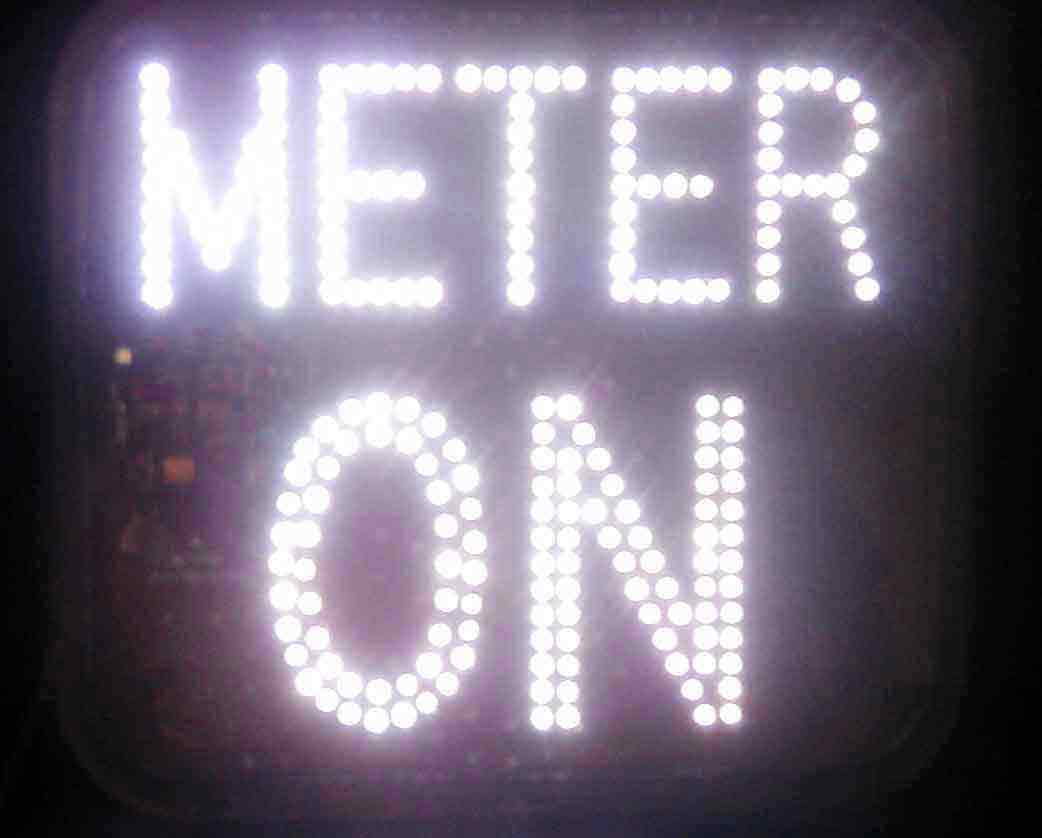 Many people believe that The Goal is happiness.
That trivializes life's meaning. You could fill your life with activities that make you happy: sex, favorite foods, movies, a Lexus, a beautiful house, hell, I'll even throw in a front-row seat at a Lady Gaga concert. Yet you would die leaving the world no better for your presence. And the extent to which you have left the world better is, in my view, the only valid criterion for assessing whether you've lived a worthwhile life.
It helps us live that life well-led if we use The Meter: -10 (selling crack to kids) to +10 (working to cure cancer) every time we're deciding what to do next. We simply need ask ourselves, "What could I do that would score high on The Meter?"
On my radio show Sunday, I discussed that approach to the life well-led with a leading public intellectual, Richard Posner. He raised objections:
- It's too joyless. I stipulated to that but argued, as above, that making the world better is more important than an individual's pleasure.
- Most people don't want to deprioritize happiness, even if, in the abstract, they believe that happiness should be subordinated to contribution. My response: the perfect is the enemy of the good. As with most philosophies and religious principles, they are ideals to aspire to. Because we are human, we will never achieve perfection but better for even a few additional people to strive toward an admirable benchmark than for them to live the life unexamined or in the service of less worthy goals.
- Most people can't make enough of a difference to make it worth sacrificing pleasure. I disagreed. Take, for example, an accounts-payable clerk deciding on Saturday whether to watch a football game or to pay the bills he couldn't finish paying on Friday. If he chooses to pay those bills, he ensures the recipients have their money to spend when they're supposed to have it. If instead, the clerk elects to watch the football game, the recipient suffers unfairly. So even in this example of a relatively impotent person, his selecting the activity that would score higher on The Meter makes a significant difference. Multiply that by the clerk's countless such decisions and by all the people who might choose to use The Meter, and the total benefit is large.
- The lack of recreation would hurt their health thereby, net, resulting in their doing less good for the world. In fact, working at what one does well is usually less stressful than are many recreational activities. For example, many sports game watchers' and video game players' blood pressure likely rise more than when they're doing pro-social work. Even a lauded activity such as taking care of one's child is often more stressful and less beneficial than more pro-social work. Fighting with children to clean their room or do their homework is more stressful and less likely to make less of a difference to the world (the research is getting ever clearer that parenting has far smaller impact than commonly believed) than to spend more time, for example, ensuring even that bills are paid, let alone if it's a cardiologist seeing patients on Saturday, a policymaker taking extra hours to optimize consumer-protection legislation, or a cancer researcher deciding to try another research avenue rather than to play Monopoly with his kids.
Dear readers, I welcome your comments.
Monday, January 31, 2011
My Philosophy of Life

I present my philosophy of life here in hopes it will encourage you to more consciously decide how you want to live yours.
I believe the best way to live my life is to spend as many waking moments as possible using my best skills (thinking, writing, and speaking) on causes I deeply care about that don't comport with conventional wisdom.
Thus while I am pro-choice and pro gay marriage, others already exert tremendous effort on those. My efforts would be like adding a grain of sand onto a beach.
It feels more worthwhile to debunk the conventional wisdom, for example, that:
- men are treated better than they deserve to be.
- it's wise to have redistributed so many K-16 school resources from kids with the greatest potential to profit to those with the least.
- as President Obama reasserted in his State of the Union address, American higher education is wonderful. I am clear that higher education is America's most overrated product. I've proposed a specific model for its reinvention.
To give myself some successes, I do career coaching and speak and write on career-related matters, and pursue social change in one politically correct way: promoting peer mentoring, which was popular in the '80s but gave way to the next innovation du jour.
So, what's your philosophy of life, your approach to living the life well-led?
Subscribe to:
Posts (Atom)


