Showing posts with label bailouts. Show all posts

Sunday, January 29, 2012

A Report from a U.S. Auto Manufacturing Plant Floor

I just got home from a party at which I talked with a guy who worked on an assembly line at a U.S. car manufacturing plant.

This is as close a paraphrase of the essence of what he said as I can remember:

"Quality control is a joke...We smoked dope a lot... Our welds were okay--usually. (He laughed.) My cars didn't squeak--usually. (He laughed.)... And we'd put coke cans and dead rats into the axle to see if QC (quality control) would find it. They never did." (He laughed.)

Tuesday, May 19, 2009

Is it Wise to Raise CAFE Standards?

On first blush, requiring car manufacturers to make vehicles get better gas mileage (the so-called CAFE standards) seems a no-brainer: It minimally restricts people's freedom while reducing air pollution and our dependence on Middle East oil.

But on second blush, I'm not so sure:

  • If CAFE standards are raised, people will likely drive more thus emitting more exhaust because it's less expensive to drive: They'll spend less per mile on gas and the smaller high-gas-mileage cars (e.g., Toyota Corolla) cost less than larger cars (e.g., Toyota Camry.)
  • Smaller cars have smaller engines, which have a shorter lifespan, which means more cars will sooner enter the landfills and require the building of more new cars, the creation of which is bad for the environment.
  • Smaller cars are more dangerous--more people will die as a result.
  • The new high-tech gizmos needed to improve gas mileage (for example, variable-interval valves) will cost the average buyer $1500 to $2500 more per car, which makes people less likely to buy a car, which will be yet one more nail in the U.S. automakers' coffin.
  • And if people are still driving their old car, it's more likely to be a polluter, which will hurt air quality.
The lesson in all of this is that every time the government takes an action, there are likely enormous and often unanticipated side effects. In this case, I sense (and I don't think anyone can be sure,) that when the government restricts people's freedom to buy the vehicle they want and says that the government knows better than vehicle manufacturers how to make the right ones, when the smoke clears, we're, net net, worse off.

Monday, January 26, 2009

Obama's Plan Would Have Us Eat Our Seed Corn

It's unfortunate but most people's minds are not changed by intellectual analysis. Most people's opinions are more often changed by metaphor, images, and slogans.

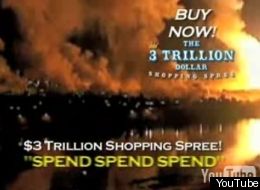
My previous posts have used logical analysis and economic theory to explain my antipathy to Obama's unprecedented trillion-dollar spending package. In this post, I will use metaphor, an image (see right,) and a slogan:

We'd ridicule a farmer who'd eat his seed corn (the corn he uses to plant his crops.) Yet Obama's "stimulus" plan of bailouts for bad companies, overreaching credit card and mortgage holders, and tax increases (Yes, he WILL increase net taxation) would eat America's seed corn: the money that successful businesses use to hire new workers and develop new products, and the money that individuals use to buy things from good companies and to save/invest for their future.

Sure, short-term, Obama's stimulus package will create some jobs but when the seed corn of our tax dollars runs out, the jobs created by our tax dollars will wither away and our economy won't grow--Rather, America will become an ever less arable land.

So, the slogan? Don't Let Obama Eat Our Seed Corn!

Friday, January 23, 2009

Obama's Stimulus Spending Won't Stimulate Much

In Wednesday's, New York Times, University of Chicago economics professor Casey Mulligan argues that Obama's stimulus package in fact will create few new jobs.

For example, one of Obama's priority spending areas is health care. But there already is near full employment in health care. The U.S. has to import nurses from countries such as the Philippines to meet the current need. Indeed, health care is the one field that has increased employment during every month of the current recession. Spending more taxpayer money on health care will mainly just move health care workers from one employer to another--or result in importing more health care workers. It won't, as Obama promises, create many new jobs

Even in Obama-priority fields in which many jobs have been lost in the recession, for example, infrastructure construction, few jobs will be created by the Obama spending spree. Mulligan points out that many, although certainly not all, the workers laid off from residential construction have already picked up work in commercial construction. Too, much construction work is done by illegal immigrants, for whom Obama has promised to create a path to citizenship within his first 100 days in office. So, ironically, the largest stimulative effect of Obama's infrastructure spending may be to create jobs for illegal immigrants.

Mulligan additionally points out that while the large majority of the recession's job losses have been to men, Obama's economists report that half the jobs Obama will create will be aimed at women (and minorities.) So, many of those unemployed men will remain jobless. That is yet another reason why Obama's stimulus plan will not provide as many new jobs as he promises.

Of course, even more problematic is this question: "Where will the trillion dollars to pay for the unprecedentedly massive (and dubious) spending come from? "It will come from the taxpayers, who if instead, were allowed to keep their money would spend much of it on products and services, which would create real, new, enduring jobs. And of course, the Obama spending spree will also be funded by the tax dollars from successful businesses, which if instead were allowed to keep their money, would use much of it to expand their businesses and hire more people.

Sure, the Obama Spending Spree will yield a short-term boost in the economy by taking taxpayer money to create some (temporary) jobs, prop up badly run banks and car manufacturers, invest in private-sector-rejected alternative energy and other schemes, and bail out people who bought more home or took on more credit card debt than they could comfortably afford. But long term, that won't stimulate the economy. It will kill it.

It's only human to be tempted to bail out the most failing people and businesses but as every triage medic in the battlefield knows, you'll save more lives by using the limited resources to help those most likely to recover, not those who scream the loudest.

That means allowing successful people and businesses to keep their money, not have the government forcibly take it from them to give to the unsuccessful. Real, sustainable, enduring growth comes not from tax increases but from tax cuts.

Tuesday, January 20, 2009

Why Obamanomics Will Fail

This letter was forwarded to me by Jeffrie Givens, a regular reader of this blog. 

I do not know if the letter is real or not but it explains, better than I have on this blog, why Obama's economic spending and taxation plan is likely to make matters worse, much worse.

To All My Valued Employees:

There have been some rumblings around the office about the future of this company, and more specifically, your job. As you know, the economy has changed for the worse and presents many challenges.

However, the good news is this: The economy doesn't pose a threat to your job. What does threaten your job however, is the changing political landscape in this country.

Of course, as your employer, I am forbidden to tell you how to think politically- it is against the law to discriminate based on political affiliation, race, creed, religion, etc. Yes, the elections are now over, but as Americans, we still have a powerful voice through letter writing, placing phone calls to Congress, and volunteering our time & effort for causes near & dear to us. After all, they were elected to represent you. Please do (or not do) whatever you think will serve your interests and the interests of the country the best.

However, let me tell you some little tidbits of fact which might help you decide what is in your best interest.

First, while it is easy to spew rhetoric that casts employers against employees, you have to understand that for every business owner there is a back story. This back story is often neglected and overshadowed by what you see and hear. Sure, you see me park my Mercedes outside. You've seen my big home at last year’s Christmas party. I'm sure all these flashy icons of luxury conjure up some idealized thoughts about my life.

However, what you don't see is the back story:

I started this company 12 years ago. At that time, I lived in a 300 square foot studio apartment for 3 years. My entire living apartment was converted into an office so I could put forth 100% effort into building a company, which by the way, would eventually employ you. My diet consisted of Ramen Pride noodles because every dollar I spent went back into this company. I drove a rusty Toyota Corolla with a defective transmission. I didn't have time to date. Often times, I stayed home on weekends, while my friends went out drinking and partying. In fact, I was married to my business – hard work, discipline, and sacrifice.

Meanwhile, my friends got jobs. They worked 40 hours a week and made a modest $50K a year and spent every dime they earned. They drove flashy cars and lived in expensive homes and wore fancy designer clothes. Instead of hitting the Nordstrom's for the latest hot fashion item, I was trolling through the Goodwill store extracting any clothing item that didn't look like it was birthed in the 70's. My friends refinanced their mortgages and lived a life of luxury. I, however, did not. I put my time, my money, and my life into a business with a vision that eventually, some day, I too, will be able to afford these luxuries my friends supposedly had.

So, while you physically arrive at the office at 9am, mentally check in at about noon, and then leave at 5pm, I don't. There is no "off" button for me. When you leave the
office, you are done and you have a weekend all to yourself. I unfortunately do not have the freedom. I eat, shit, and breathe this company every minute of the day.

There is no rest. There is no weekend. There is no happy hour. Every day this business is attached to my hip like a 1 year old special-needs child. You, of course, only see the fruits of that garden -- the nice house, the Mercedes, the vacations... you never realize the back story and the sacrifices I've made.

Now, the economy is falling apart and I, the guy that made all the right decisions and saved his money, have to bail-out all the people who didn't. The people that overspent their paychecks suddenly feel entitled to the same luxuries that I earned and sacrificed a decade of my life for.
Yes, business ownership has is benefits but the price I've paid is steep and not without wounds.

Unfortunately, the cost of running this business, and employing you, is starting to eclipse the threshold of marginal benefit and let me tell you why: I am being taxed to death and the government thinks I don't pay enough. I have state taxes. Federal taxes. Property taxes. Sales and use taxes. Payroll taxes. Workers compensation taxes. Unemployment taxes. Taxes on taxes. I have to hire a tax man to manage all these taxes and then guess what? I have to pay taxes for employing him. Government mandates and regulations and all the accounting that goes with it, now occupy most of my time. On Oct 15th, I wrote a check to the US Treasury for $288,000 for quarterly taxes. You know what my "stimulus" check was? Zero. Nada. Zilch.

The question I have is this: Who is stimulating the economy? Me, the guy who has provided 14 people good paying jobs and serves over 2,200,000 people per year with a flourishing business? Or, the single mother sitting at home pregnant with her fourth child waiting for her next welfare check? Obviously, government feels the latter is the economic stimulus of this country.

The fact is, if I deducted (Read: Stole) 50% of your paycheck you'd quit and you wouldn't work here. I mean, why should you? That's nuts.

Who wants to get rewarded only 50% of their hard work? Well, I agree which is why your job is in jeopardy.

Here is what many of you don't understand ... to stimulate the economy you need to stimulate what runs the economy. Had suddenly government mandated to me that I didn't need to pay taxes, guess what? Instead of depositing that $288,000 into the Washington black-hole, I would have spent it, hired more employees, and generated substantial economic growth. My employees would have enjoyed the wealth of that tax cut in the form of promotions and better salaries. But you can forget it now.

When you have a comatose man on the verge of death, you don't defibrillate and shock his thumb thinking that will bring him back to life, do you? Or, do you defibrillate his heart? Business is at the heart of America and always has been. To restart it, you must stimulate it, not kill it. Suddenly, the power brokers in Washington believe the mud of America is the essential drivers of the American economic engine. Nothing could be further from the truth and this is the type of change you can keep.

So where am I going with all this?

It's quite simple. If any new taxes are levied on me, or my company, my reaction will be swift and simple. I fire you. I fire your co-workers. You can then plead with the government to pay for your mortgage, your SUV, and your child's future. Frankly, it isn't my problem anymore.

Then, I will close this company down, move to another country, and retire. You see, I'm done. I'm done with a country that penalizes the productive and gives to the unproductive. My motivation to work and to provide jobs will be destroyed, and with it, will be my citizenship.

While tax cuts to 95% of America sounds great on paper, don't forget the back story: If there is no job, there is no income to tax. A tax cut on zero dollars is zero.

So, when you make your decision whether to support or fight against the President Obama’s tax & economic plans, ask yourself, who understands the economics of business ownership and who doesn't? Whose policies will endanger your job?

Answer those questions and you should know who might be the one capable of saving your job. While the media wants to tell you "It's the economy stupid" I'm telling you it isn't.

If you lose your job, it won't be at the hands of the economy; it will be at the hands of a political hurricane that swept through this country, steamrolled the constitution, and will have changed its landscape forever. If that happens, you can find me in the South Caribbean sitting on a beach, retired, and with no employees to worry about.

Signed,
Your Boss

Monday, January 12, 2009

Will We Never Learn?

We bailed out Chrysler 20 years and they still produce crappy cars and are begging for more of our money.

We bailed out the likes of insurance giant AIG and superbank Citigroup with an inconceivably large $700 billion and we've seen no benefit.

Indeed the government admits to not being sure where the already spent $350 billion of it went. Outside observers believe it was spent not on adding liquidity but on mergers and acquisitions and to pay employee bonuses.

We're bailing out the automakers when, even the U.S.'s best hope--the $40,000 green Chevy Volt will outsell the $22,000 Toyota Prius seems to this writer like a pipe dream.

And now President-elect Obama wants to spend a trillion (Yes, a trillion) dollars of our money on a bunch of government-mandated projects. (Among proposals on the table: an organized crime museum in Las Vegas--Can't the mafia afford to fund that?) the alternative energy sloppy thousandths that I've previously written about, and lots of mass transit aimed at forcing us out of our cars and into time-wasting, sardined-in public transportation.

And you and I are just going to lie back and take it. Indeed, America will be reveling in Obama's inauguration. They'll gyrate in joy over the promised "change." We'll see how long they revel. Obama will print lots of dollars that will trigger inflation; he'll raise taxes on the middle class (Yes, renege on his promise and raise taxes,) reward the unworthy with money taken from the worthy, and we WILL become a third-world nation.

Saturday, December 6, 2008

If I Were President of the United States

If I were the president of the U.S., these would be my priorities:

1. No bailouts. Bailouts reward mismanaged corporations and overspending states as well as people who bought more house or car than they could comfortably afford, while punishing the innocent taxpayer and upstart companies.

2. Encourage a thrift-based, much less materialistic society, in which you don't buy what you can't comfortably afford. A home is the only item that one should borrow for. 

When I came of age, I wanted a car and bought only what I could comfortably pay for in cash: a $300 ten-year-old Ford Falcon with a manual choke. (And I loved it more than if I had bought a brand new car and had to endure the constant pressure of car payments 

3.  Increase CAFE standards so that all cars must get at least 40 mpg, with further increases as car efficiency technology improves. That increases energy independence while saving people money and minimally impeding their freedom to travel. Compare that with environmentalist proposals to raise gas taxes (regressive) or not build freeways so people, sick of gridlock, are forced to take time-wasting, often sardined-in mass transit.

4. No sloppy-thousandths spending of taxpayer money on alternative energy schemes. Corporations are investing in alternative energy, but only in what can reasonably expected to be cost-effective over the next decade. What's left are largely those schemes deemed unworthy. I can't look the struggling working- and middle-class taxpayer in the eye and says it's worth my taking more money from your pocket to pay for sloppy-thousandths schemes.

5. I would talk with my enemies, yes, including terrorists. That increases chances of finding solutions.

6. Stop trying to compete with China and India in science and engineering, for example, by forcing even very non-academically-oriented high school student to take Algebra 2 and math-centric science courses. In an era in which ever more science and engineering work can be sent over the Internet, it's too unlikely that the U.S. can ever compete with Asian countries, which have many more people, a culture that has long valued science and engineering, and countless people willing and able to do the work for a small fraction of what American engineers and scientists charge. 

Replace required science/math courses with courses in entrepreneurship, conflict resolution, financial literacy, information literacy, and ethics. Of course, capable students should be allowed to elect to take challenging science and math courses. 

7. Reestablish ability-grouped classes in school beginning in the 1st grade. Ensure that placement is fair and fluid.

8. Replace professors with master practitioners in all professional training programs: in health care, law, business, etc. Master practitioners would not only improve the training but would shorten it--professors add length to their training programs, not because it's time-effective for students, but because it feeds their scholarly interests and keeps them employed. 

9. Eliminate the enormous redundancy in government: Many agencies governed Katrina relief with disastrous consequences. Every word a teacher utters is constrained by multiple government bureaucracies' rules.

10. Tort reform. Too much of American GDP goes to preventing and responding to unjustified lawsuits. 

11. Ensure that basic health care and housing  (dormitory style) are available for all. But the people who pay into the system would get a higher quality of health care. I am agnostic on whether it should be a single-payer system. 

12. Restrict unions' power to ensure lifetime job security despite bad performance, especially among teachers. Lifetime job security (along with other factors) has ruined all the major unionized industries: car, airline, and steel.

13. Negotiate toughly with the World Bank and China to ensure true free trade.

14. Privatize most things, for example, schools, prisons, police, fire, road construction. Example: CalTrans (a public agency) normally takes years to build a road. But after an earthquake, when the San Francisco Bay Bridge needed immediate retrofitting, after Caltrans diddled with it for years, it finally hired a private company CC Myers--and it completed the project in one weekend. I have been told that City of San Francisco carpenters all make each other work as slowly as possible--or they get their tires slit. Even worse, they build, for example, a fence, then tear it down and build it again so they can say they need to hire more workers to complete the assigned workload.

15. Lightly increase regulation of financial institutions. Heavy regulation brings more problems than it solves--to wit, Sarbanes Oxley, which costs corporations billions. If someone smart seriously wants to be crooked, an extra layer of government regulations won't deter. 

16. Prosecute reverse discrimination, which is rampant and devastates the quality of the goods and services we receive as well as deprives the most meritorious candidate of jobs and spots in colleges. I know an eminent person who serves on three large corporate boards (a Latino woman I might add) who said that to avoid government sanctions, all three companies are forced to reject or not promote more qualified whites and Asians in favor of less productive African-Americans and Latinos even to very high positions, and to mitigate the damage, "put them where they'll do the least harm."

17. Reduce taxes by 50%, while ensuring that corporations pay their fair share--I'd look hard at why many profitable corporations pay no tax. Make equivalent spending cuts, for example, the ideas in #1, 9, and 14 above, and in reducing defense and entitlement spending. I would, for example, means-test Social Security.

18. Move toward a balanced budget. It's the only long-term guarantor of a stable economy. 
 
The result of my proposals: China and India will have more money but America will have a stable, competent, integrity-based quality of life. 

Sunday, November 9, 2008

STOP THE BAILOUT CONGA LINE: No Business is "Too Big to Fail"


Just what I was afraid of: Obama and the new more liberal congress aren't close to being inaugurated yet and already they want to take more money from working- and middle-class people to bail out those who don't deserve it.

GM, Ford, and Chrysler had a huge headstart--For decades, the industry had virtually no competition. The playing field was unlevel, in their favor. Yet, soon after the Japanese and Koreans started to make cars, the union-strangled U.S. car industry could not compete on the most important standard of all: reliability.

Year after year, Consumer Reports has made clear that American-made cars break down more often than Asian-built ones. No one ever accuses the Japanese of producing Monday-morning cars.

Even if the United Autoworkers Union drives the auto industry to its knees, the union apparently will continue to insist on lifetime job security and mammoth retirement packages despite the workers producing cars that break down more than the competition's.

Of course, it's hardly all the workers' fault. They can only install the parts that are given to them, and, in talking with auto mechanics in repair shops and workers on a GM assembly line, they're convinced that many parts and systems are inferior to many foreign manufacturers'. 

And certainly, U.S. auto executives deserve a big share of the blame. Their lust for short-term profits fueled their building building mainly high-profit-margin big cars and SUVs, figuring the materialistic American buyer would stay indifferent to thrift and environmentalism. Meanwhile Asian car makers, especially Toyota, recognized that the world is changing.

And now the Democrats want to reward the U.S. auto industry's bad behavior by propping it up with a massive bailout using our money.

It's fundamental that if you want to improve behavior, you reward good behavior and punish bad. The Democrats know that: they're always arguing that raising taxes on gasoline and on tobacco will reduce their use. Yet now, they want to reward the U.S. auto industry for its bad behavior.

If we hadn't bailed out Chrysler 20 years ago, the auto industry would have felt forced to improve. But the industry knowing that the U.S. government would probably never allow the industry to fail encouraged the automakers and auto workers to feel complacent about continuing their inferior practices.

Another auto industry bailout will only encourage further bad behavior and more inferior cars that can't compete with the Japanese or Koreans. And just imagine what will happen when the newest carmakers on the block, the Chinese, get their act together.

There is a huge hidden cost of bailouts: demotivating the small good guy. If entrepreneurs and small companies see that when a big company screws up, the government views it as "Too Big to Fail" and bails out it, that sends a dispiriting message to the small good guy: No matter how good you'll be, the government won't let you compete. No formula could better strip the U.S. of its historic advantage: the power to innovate.

If we prop up the bad with good people's tax money, it will yield only a short-term feel-good. In the long-run, we will become a bad country.

Yet the government is contemplating ever more bailouts. We've already bailed out the financial industry with uncertain results, are bailing out insurance giant AIG (who then congaed to Vegas for a $350,000 celebration) will soon bail out the auto industry, and rushing up to join the line are four more insurance companies,  Citigroup, the airlines, home builders, people who bought houses they couldn't afford, and those who ran up too much credit card debt.

Other short-sighted industry "leaders" are failing too.
  • Levitz Furniture insisted on huge showrooms and overpriced low-quality, poorly styled furniture. They're in Chapter 7 (liquidation) bankruptcy. Meanwhile Sweden-based IKEA is doing just fine. Should you and I bail Levitz out?
  • How about the nose-diving Circuit City, Best Buy, and Macy's, with their enormous, expensive bricks-and-mortar stores while the world buys online. Should you and I bail them out?
  • What about the liberals' darling company Whole Foods, which refused to stop its noble but unrealistic business practices even though that forced it to charge absurdly high prices that most shoppers won't pay. So its stock price has plummeted from 78 to 9 while German-owned Trader Joe's has long checkstand lines filled with happy customers. Should you and I bail out Whole Foods?
  • And then there are the cities and states. Here in California, our governor's already got his hand out for a huge bailout. 
Under the current "Too Big to Fail" mindset, the conga line for handouts will continue to grow until the taxpayers have been stripped of nearly all their money or there is a tax revolt.

I believe the auto and other struggling industries should be left to fix themselves or die.

What about laid-off workers? I'd encourage the private sector to create excellent online training programs. The entrepreneurial among laid-off workers would be trained on how to start a successful, ethical, and important small business. The not-entrepreneurial would be trained in such sustainable fields as health care, biotech, education, global business, elder care, and law enforcement.

I believe that's a surer road to a sturdy long-term economy than the ever-lengthening, Democrat-led bailout conga line.
 

blogger templates | Make Money Online