


Showing posts with label change. Show all posts
Showing posts with label change. Show all posts
Tuesday, January 28, 2025


Wednesday, October 23, 2024
Sunday, September 15, 2024
Saturday, August 31, 2024
Monday, August 19, 2024
Friday, September 10, 2021
Transformers: 7 Ways People Have Changed Their Life Fast
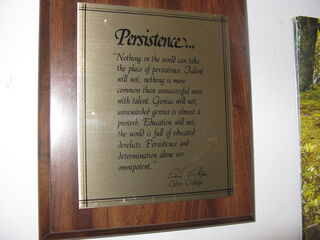
Many people would love their life to be transformed instantly, And just occasionally, I've seen that happen. My Psychology Today article today lists the triggers I've most often seen.
Tuesday, May 7, 2019
4 Approaches to Change: advice-offering, rational-emotive behavior therapy, motivational messages.

Even good psychotherapists (and advertisers) have a hard time getting people to change. It’s been said that it takes six to nine exposures to an ad to get someone to change their brand of toilet paper!
So, there are no magic pills yet. Best we can do, in our own lives and in trying to shepherd others to change, is to have a toolkit of interventions to draw from. My PsychologyToday.com article today describes four widely used ones.
Friday, September 22, 2017
On the Difficulty Of Getting People to Change

Saturday, July 23, 2016
"A Person of substance: The interior and exterior life of a morbidly obese person

Wednesday, July 6, 2016
The Scholar: A short-short story about change

Saturday, December 7, 2013
Should You Stop Trying to Change Yourself?

It ain't that easy, at least for my clients and for me:
My cold-call reluctant clients rarely get comfortable cold-calling. My math-challenged clients rarely become good at math. My shy clients rarely become social.
I know I should eat broccoli not cheese, be laid-back not intense, cheerful not dour, but I can't make myself do any of them for very long. Nothing helps: reminders, accountability, looking at supposed childhood roots, nothing.
We are mainly a function of our genes and early environment. Defying those ain't easy. So might we all be wiser to accept ourselves basically as-is and simply find the work, relationships, and recreations that don't require us to make major changes?
You can tune-up a Prius all you like but it will never win a race against a Porsche. But a Prius, in its context, is most worthy in itself.
Saturday, May 2, 2009
Change Can Sometimes Occur Quickly

I watched my client and now friend Jeffrie Givens sing at a student recital. Her voice was lovely but throughout the performance, she stood still, arms at her sides.
I suggested that at the next recital, "You sing Queen Latifah's supersexy song from Chicago, When You're Good to Mama, Mama'll Be Good to You. And your job is to be a performer, not just a singer. To learn the difference, watch YouTube videos of singers who really perform--for example, Bette Midler, Gladys Knight, Queen Latifah. Your job is to perform as big as they do."
The next time I saw her sing, she had made a total transformation: she was as animated and entertaining as Gladys Knight is.
Next, I said, "Now, you're going to try out for a role in a musical at the Woodminster Amphitheatre." It's a 1500-seat venue that hosts semi-professional musical plays. She sang that song at her audition, and lo and behold, although she's never taken an acting course in her life, never auditioned for anything in her life, she was cast in Brigadoon.
Next week, she auditions for a major part in Rent.
The embedded lessons about change:
1. Change is often best facilitated by demonstrating models of the desired change.
2. It can more effective to try for an instant total transformation than incremental change.
3. Change is more likely when someone is pushing you, believing in you.
4. Create high-stakes motivation to change. In this case, her first motivation was to do much better in front of the recital audience. The next motivator was to get to be in a high-quality production of a play in a huge venue.
1. Change is often best facilitated by demonstrating models of the desired change.
2. It can more effective to try for an instant total transformation than incremental change.
3. Change is more likely when someone is pushing you, believing in you.
4. Create high-stakes motivation to change. In this case, her first motivation was to do much better in front of the recital audience. The next motivator was to get to be in a high-quality production of a play in a huge venue.
Subscribe to:
Posts (Atom)

