skip to main |
skip to sidebar
Some evidence suggests a genetic predisposition to risk-taking.
Not withstanding that and philosophical determinists from Kant to Sam Harris, I like to think we retain a measure of free will.
With that as an assumption, my Psychology Today article today offers a self-assessment inventory that
could help you decide whether you want to direct your free will in a new
direction.
Anyone who is 65 or younger, especially if “well-educated,” has
throughout their life, probably received a consistent message from
society's mind molders—the schools colleges and media—that liberal is
good, conservative is bad.
Broadly, that translates into redistributing
from the Haves to the Have-Nots: whether it’s more taxpayer-paid
programs for the poor, supporting Palestinians over Israelis, and, of
course, supporting Democrats over Republicans.
I have both liberal and conservative friends. In recent years and
acceleratingly so in recent months, the liberals are feeling buoyed
and/or angry, while the conservatives are more often sad, silenced, and often lonely. My Psychology Today article today offers a few thoughts for conservatives.
When are we exercising due caution rather than
crossing the line into over-suspiciousness?
Of course, that question
can’t have a black-and-white answer. But it might help to inventory your
level of trust in common situations and then reflect on whether and in
what circumstances you should be more trusting or less. My Psychology Today article today offers a 10-item self-assessment.
Adventure. That word can evoke images from shopping to swashbuckling.
My Psychology Today article today offers composite letters, one from a person who is living a quite
standard life, the other from someone who is living quite large. I offer
thoughts to each.
There certainly are times to speak up. At the macro level, we might
speak out on a political issue. Micro, we often should ask for what we
want lest we unduly sacrifice our agency. Plus, speaking is active
learning: We grow from figuring out what to say and then saying it.
But these days, silence may be getting short shrift. I make the case in my Psychology Today article today.
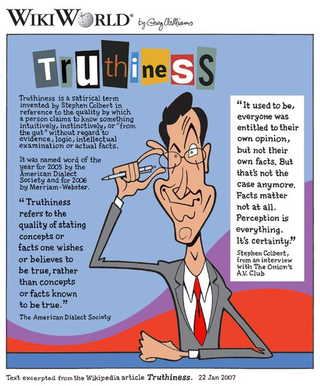
Stephen Colbert coined the term, "truthiness," which refers to an
assertion that seems true but well may not be. In our heated times, it
seems that truthiness has proliferated.
My Psychology Today article today attempts to make it easier to distinguish truth from truthiness.
Sure, there’s a time to go hard, for example, when competing in the
Olympics. But perhaps surprisingly often, it's wise to aim for the easy. My Psychology Today article today offers easier options for approaches to activities in both your professional and personal life
blogger templates | Make Money Online