


Showing posts with label ADHD. Show all posts
Showing posts with label ADHD. Show all posts
Sunday, February 9, 2025


Monday, December 11, 2023
Tuesday, March 3, 2020
Tough Problems: A child who tests the limits, a child with ADHD?

Today, the first question is about a child who's always testing the limits. The second is about a child whom the teacher wants tested for ADHD and to be put on Ritalin.
Friday, September 8, 2017
Tips for Sub-Clinical Sadness, Worry, Anger, ADD/ADHD

- They’re sad by nature or because of external events but they’re not—as in clinical depression— numb or inert, let alone suicidal. They function, just not as happily as they’d like.
- They tend to worry more than they'd like but rarely panic, nor does their anxiety greatly impede their quality of life.
- They’re predisposed to anger but aren’t in an ongoing state of suppressed anger nor are subject to frequent outbursts let alone physical violence.
- They have trouble staying focused but their distractibility doesn’t rise to the level of clinical attention-deficit disorder; neither the spacey version (ADD), or the hyperactive version (ADHD.)
Monday, October 3, 2016
A Tough Guy: A remarkable story of resilience

Saturday, August 20, 2016
An Active Boy Writes to His Teacher

I wouldn't have had the self-awareness nor the moxie to write the letter I posted on PsychologyToday.com to any of my teachers but perhaps your seeing it will help parents who are trying to get the teacher to accommodate to their active child rather than putting him on that risky Ritalin leash.
Thursday, February 4, 2016
Buzz: A Short-Story Story About a Person with ADHD

Sunday, October 11, 2015
Excitable Ed: A Story About A Child Whose Teacher Wants Him on Ritalin

Monday, September 1, 2014
An Authoritative Look at ADHD: An interview with Stephen Hinshaw

ADHD is among our most
controversial disorders. Is it really a disorder or a function of schools' poor response to active kids’ needs? Is the increase in prescribing stimulant
drugs for ADHD mainly because it’s helpful or because drug companies are
pushing it?
Stephen Hinshaw is among the most respected voices on ADHD. My interview of him is my PsychologyToday.com article today.HERE is the link.Thursday, April 10, 2014
When Can Attention Deficit Disorder (ADD, ADHD) Be An Asset?

While in most cases, attention-deficit disorder's distractibility, inpulsivity, and disorganization are a net negative on one's life, sometimes they're a net positive and don't require intervention. This article profiles a client of mine for whom that is the case.
Tuesday, February 18, 2014
Days of Our Work Lives: An unvarnished look at work today: Part III: Adam's Saga. Episode 1: ADHD? Ritalin?

Part III: Adam's Saga
Episode 1
ADHD? Ritalin?
In Part I we saw too-intense David die. In Part II, his wife Susan succeeded...moderately. Part II ended with Susan wondering how to decide when good is good enough.
And that applied to her nine-year-old son, Adam, who while kind by nature, was also active by nature, and despite Susan and Ben's efforts to be good parents, was still challenging at school.
Thud! Adam's chair hit the floor. His teacher sighed, "How many times do I have to tell you to not tilt your chair?!"
He loved that game. It gave him an adrenaline rush: "How far can I tilt without falling?" Of course, he'd occasionally go too far.
Embarrassed, Adam picked himself up and tried to avoid further criticism by cleaning the mess on his desk. Papers were always spewing out of his desk and the same could be said of his backpack.
Alas, just minutes later, Adam had relaxed his vigilance and was back to "multitasking:" This time, while paying attention to the teacher's spelling lesson on "there," "their," and "they're, he tickled the kid next to him and was concocting another of his "tests" that he would pass around the room.
Adam's previous creations included a three-question "Intelijence Test" and a "Populerity Test:" "Write who you think is the most popular boy and girl in our class."
That day's offering was a three-question "Sex Test: How Much Do You Know About Sex?" As usual, before his kid's-version of a Cosmo quiz made it halfway around the class, the teacher intercepted it and was about to read it aloud to embarrass Adam until she read the first question, "Where does a boy put his peepee into a woman?"
She had read Adam's record and noted that last year's teacher had urged that he go on ADHD medication but "The father (David) refused. He blamed the teacher: 'If only teachers would meet active boys' needs and make lessons more interesting, you wouldn't need to put him on a Ritalin leash!'" After school that day, she called Susan.
And the teacher convinced Susan to take Adam for an evaluation by a physician specializing in ADHD.
He said, "Two-thirds of kids who try an ADHD drug show significant improvement and quickly. Ritalin has been around forever so it's proven safe, it's as or more effective than the newer drugs, it's short-acting so he can take it only so it will help him during school hours. And it's available as a generic so it's cheap. There's little to lose by trying it for a month."
Susan wasn't convinced. "What about side effects?"
"We'll try a low dose, and especially because it's the short-acting Ritalin, he should have little if any side effects."
Ben was not sold: "But if he takes uppers, he'll be deprived of the opportunity to learn how to adapt to his natural self, so he'll be forced to stay on them for life."
Susan added, "And over time, won't he'll build up tolerance so he'll have to keep taking more? Being on uppers for life, an ever stronger dose, can't be good for you."
The doctor responded, "While yes, some people stay on ADHD medication for life, some kids outgrow ADHD enough by adolescence to stop taking it. And the evidence is mixed on whether kids do develop a tolerance to it. Right now, we are 100 percent certain Adam needs help. It's worth a one-month trial. You can always stop it but why not see if he is one of the lucky 2/3?"
And he was. While no one could call Adam laconic, a fairly low dose put his activity level in the normal range: He was far more able to stay focused, not bother other kids...much. And he was glad to be taking it: "I didn't realize how out of control I was."
But not everything was happiness and light.
The next episode is HERE.
Monday, February 10, 2014
Days of Our Work Lives: An unvarnished look at work today: Part I: David's Saga. Episode 13: Far From the Madding Crowd

Part I: David's Saga
Episode 13
Far From the Madding Crowd
They had geographic freedom. David's big win at work enabled him to convince his boss to let him work remotely--He'd only occasionally have to come to the San Francisco office. And Susan had only a few music students so moving would cost her little.
They decided on Sage River, Washington (a fictitious name for a real town,) an hour from Seattle but light-years away in feel: green, safe, and where a nice home costs $200K. Plus, it was a tight community. For example, nearly every week, there was a fun fundraiser for some good cause. And importantly, there was a friendly public school, with 15 or 20 kids in each class, and teachers who had a better sense of perspective than those Bay Area teachers who viewed algebra in elementary school as more important than learning how to estimate, the details of the Peloponnesian Wars more important than real-world one-on-one conflict resolution, who prioritized academic rigor over developing creativity and kindness let alone enjoying the oh-too-brief breathing space of childhood.
The transition from San Francisco to Sage River was easier than they had feared:
David had no trouble working from home: The files he worked with, all digital, were as available in Sage River as in San Francisco. He met with colleagues by phone and Skype. Whatever distraction working at home caused was compensated for by his zero-minute commute. No matter how much he had told himself that traffic is out of his control and so should stay calm, he just couldn't. By the time he had arrived at his desk each morning in San Francisco, he was already a little dissipated.
Susan also discovered the wonders of Skype and taught her music students that way. And she attracted a few new piano students with a YouTube video she created on how to learn to play the piano by ear. The method was simple yet effective: By trial and error, plunk out songs you can hum--like Mary Had a Little Lamb. Each trial gives the student's feedback, and soon, most students are learning to play by ear and via a much more pleasant process than learning to read sheet music and doing Hanon exercises.
And because life was simpler, David and Susan had more time and energy and so, for example, they were able to focus more on how to deal with Adam's ADHD diagnosis.
They realized they were being defensive in summarily dismissing that. No, they still didn't think the answer was to make Adam take amphetamines for the rest of his life. But they agreed that a more unified front on parental boundary-setting was called for. So they agreed to, for example, when Adam threw a fit when asked to take his own cereal, they wouldn't give in. Instead, they'd say something like "Adam, I know you don't want to act like a baby. You want to be a big boy. Well, big boys take their own cereal. I know you can do it." And if that doesn't work, "I'm disappointed in you, Adam. I know you want to do better. Well, if you take your cereal, you can have breakfast, otherwise you'll have to stay hungry." Parenting by guilt, with reward and punishment added as-needed. And if despite all that, Adam continued to tantrum, they agreed they'd ignore it--giving him attention would only reinforce his bad behavior. That was their mantra: "parenting by guilt." David and Susan weren't then perfect parents but good-enough parents.
Next, it was time to look at their marriage.
HERE is the next episode.
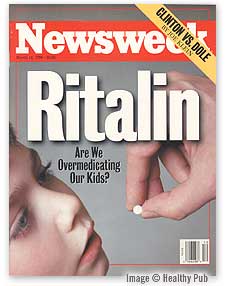
Days of Our Work Lives: An unvarnished look at work today: Part I: David's Saga. Episode 12: ADHD and a $300 Dog-Off-Leash Ticket
Part I: David's Saga
Episode 12
ADHD and a $300 Off-Leash Ticket
Alas, David had little time to bask--there was a problem at home: His son Adam's teacher had referred him for special ed testing and the diagnosis came back: attention-deficit-hyperactivity disorder (ADHD.)
David and Susan had always known Adam was an active boy. They had observed him in class and saw that Adam had a hard time sitting still but David said, "I don't remember having to sit for so long and do so much academic stuff in 2nd grade. They hardly even have any recess." They considered Adam to be a normal active boy.
But when the school called David and Susan to attend a meeting with Adam's teacher, a special education teacher, the school psychologist, and the principal, they were sobered.
The school psychologist explained: "Perhaps in the old days, when 2nd grade curriculum was more loosey-goosey, Adam's not paying attention, his distracting the other kids, could have been tolerated but now with the Common-Core Curriculum's ratcheted-up standards, we just can't let it go--not for his sake and not for the class's. We recommend he see a psychiatrist to be evaluated for Ritalin."
His teacher nodded. The special education teacher nodded. The principal nodded. David and Susan didn't nod. And David, as only David would, responded:
"You put active boys on a Ritalin leash because it makes life easy for you. Sure, you want every kid to be a compliant little worksheet doer but if you made the lessons more interesting than 'Do problems 1-48 the odds' and allowed active boys to move around more, you wouldn't need to drug them. Put my son on an amphetamine to make your tenured life easier? No way!!"
David felt a bit of that pressure in his chest but took a couple of deep breaths and it went away. And David stormed out with Susan, embarrassed, following. She said, "Let's take the dog for a walk in the park. We can be calmer there."
At the park, David said, "Let's let Casanova off the leash."
"David, you know it's dogs on leash here. Don't."
"Screw it, "David said. "Silly rule."
They turned their attention to Adam's ADHD diagnosis and David said, "When I was a kid, I was just like Adam. If they had drugged me, I never would had the opportunity to learn how to cope with myself, how to adapt. I'd have to be on uppers for the rest of my life, which would probably be shortened because that."
Susan and David agreed that the problem was not mainly Adam but an overly constraining school with its teachers that insist on passivity. But they felt they couldn't send Adam to either of the other two local public schools: Most of the kids there were from deprived backgrounds so the curriculum had to be dumbed-down--Adam would learn far less than he could and should. And those schools simply were not safe. Susan said, "Knife fights, razor-blade fights...in an elementary school?!"
Their musings were rudely interrupted by a man's voice: "Stop right there!" It was a park policeman. "Your dog is not on a leash."
"Brilliant deduction," David sneered.
"I'm sorry officer." said Susan.
"Put that dog on the leash!" And David did. "Now give me your driver's license." And he wrote David a ticket.
David couldn't restrain himself: "I can't believe you're doing this. You couldn't make it as a regular cop so you're showing how powerful you are, Mr. Park Policeman?! What this going to cost me?"
"I don't know."
"Bullshit. You know."
"$300. "
$300!" David felt a bit of that chest pressure again, so he took deep breaths, and it went away.
After the cop left, David said, "Susan, we gotta move out of the Bay Area. This place is crazy: the schools, the traffic, the crime, the keep-up-with-the-Joneses, and shit like this--$300 for having your dog off the leash in an empty park?!"
"And lose your job? My music students? And make Adam change schools?"
The next episode is HERE.
Sunday, September 22, 2013
Excitable Ed: A story for children and adults

The text is below as is a video of me reading it aloud. Even as an adult I enjoy being read to.
Feedback welcome.
Excitable Ed
(to be illustrated)
From the day he was born, Ed was excitable. He popped out practically waving pom-pons.
The day his baby sister was born, he tried to dance with her.
When his preschool teacher told the class to slowly melt like ice cream cones, by the time the other kids melted, he had melted, straightened, melted, straightened, and melted again.
When he started kindergarten, people didn't like that Ed was excitable.
When his teacher, Ms Tidey, asked a question, Ed would blurt out the answer. "Edward, you must wait until you're called on."
When Ms Tidey said it was time for recess, Ed raced to get a ball but the teacher said, "Walk, don't run. Edward! Now you can't have a ball."
One day at recess, there were pigeons on the top of the roof. Ed kept jumping up to get a better look---until one pooped on his head. All the kids laughed at Ed.
The kids liked Ed even less than the teacher did. They would imitate Ed zooming around and they didn't even care that he saw them. The teacher once called him "Excitable Ed" and now that's the only thing the kids call him: "Hi Excitable Ed!" "Zoom around for us, Excitable Ed!"
Still, Ed wanted to make friends so when he saw other kids giving little presents to each other, he bought a piece of bubble gum for every one of his classmates. But when he started to give them out, one child said, "That's stupid!" Another tattled to the teacher, "Ed has gum in class!" And Ms. Tidey said, "Give me that gum, Edward. Don't you know there's no gum in class?!" Ed bowed his head and gave her the gum.
Then one day at recess, when someone kicked the soccer ball into the street, Ed, trying to be nice, raced after it....and didn't see the car coming. Splat!
Now Ed had to be in the hospital while they put his body in a whole-body cast.
Ms. Tidey called Ed's mother and said, "I really think Edward should start taking a drug to calm him down."
His mother asked, "But Ed does fine on school tests. Maybe if the work were harder or more interesting? Or maybe if you let him move around some more?"
Ms Tidey murmured, "I think he should be evaluated for Ritalin."
Ed's mom said politely, "I'll think about it."
Ed asked his mother, "If I take that drug, will I still be me?"
Ms. Tidey passed-around a get-well card for Ed's classmates to sign but most of the kids snickered and didn't sign it. One classmate, who already knew how to write, wrote, "Are you still fast in a cast?"
Not one of Ed's classmates came to see him in the hospital.
Ed had to share the hospital room with another child: Ellen too had been in a car accident. Her face was covered with bandages, like a mummy. With Ed's whole body in a cast, they made quite a pair.
For the first time anyone could remember, Ed was quiet--he was exhausted from the accident. Besides, it is hard to zoom around when your whole body is in a cast.
Everyone in the hospital liked the calm Ed--except Ed. He felt like he lost his real self. Now, he was Boring Ed.
But one thing that didn't get put in a cast was his heart.
"Don't worry, Ellen" said Ed. The bandages will come off soon."
"I'm scared of what I'll look like," Ellen replied. The doctor's supposed to come in soon to take off the bandages,"
"Don't worry. You'll look good again fast."
And just then, the doctor walked in and, after a too-quick hello, removed the bandages.
Monsters looked better.
Ed forced himself not to say, "Ugh!." And it was a good thing Ellen couldn't see herself in the mirror.
But then Ellen could. She pulled a small mirror from her bedside drawer and said it, "Ugh! Will I be like this forever?"
The doctor hesitated and then said, "Ellen, you'll look much better,. Um, you're healing well. So good news: you can go home! Your parents will be here in a few minutes." And the doctor walked out.
Ed said, "What counts is what's on your inside."
"That's not what the kids think." Ellen replied.
Ed said, "If you're nice on the inside, your outside shines too. Kids like nice people as much as they like good-looking people."
After Ellen left, Ed laid there thinking: Does it really matter more what's on the inside? Will people like me only when I'm not my real self? Should I take that drug? For me? For the other kids?
And Excitable Ed closed his eyes.
Do you think Ed should take the drug?
Wednesday, November 21, 2012
Parenting Your Gifted Child

Guiding Your Gifted Child
by Marty Nemko
by Marty Nemko
(Originally appeared in the Mensa publication, The Intelligencer)
The government incentivizes schools and teachers to improve low-performing students' achievement. As a result, too often, bright and gifted kids' needs shortchanged.
What's the parent or other caring relative of a
gifted child to do?
Choosing a School
One option is to try to get your child admitted to a school
with a large percentage of high-ability and/or high achieving kids: a school in your district or an
inter-district transfer.
Whether or not such options are available to you, as the new
school year or semester approaches, find out if there's a teacher of your
child's grade who would be much better with kids like yours than would the other
teachers. If so, ask the principal or counselor if your child might be placed
in that class. You'll be on safer ground if you couch it as, "I visited
the classes my child might be in next year and it really seems that Ms. X would
be the best fit for his needs. Might you be willing to place him there?"
You can't request that too often but do it once or twice during your child's
stint at that school and you can make a big difference in her education without
undue effort.
Skip a Grade or Four?
Consider acceleration, grade-skipping. Especially with
today's focus on low-achieving students, acceleration works better for many
kids than does badgering the on-grade teacher to accommodate to your child's
needs. Often, despite incessant tactful requests from the parent, above-average kids
sit stultified in today's mixed-ability classes. And if a kid is active, s/he
gets in trouble and too often put on a Ritalin leash...at a ratio of eight boys for
every one girl.
Many parents worry that the academic benefits of
grade-skipping will be outweighed by social mismatch but generally, if the
receiving teacher is enthusiastic and has the child sit next to a supportive,
respected student, the result is superior to the aforementioned badgering.
If the idea of grade-skipping appeals, schedule a meeting
with the principal in which you don't blame teacher or the school. Couch your
request as simply trying to get an appropriate-level education for your child.
Support your case by showing a portfolio of the child's work in and out of
school, test scores, and a supporting letter(s) from the child's teacher, head
of the district's gifted program, and/or a private educational consultant.
After School
While we parents like to think we're most important to our
child's development, recent research suggests that peers may have more
influence. That means that one of our most potent interventions is to
facilitate good friendships. If you don't know which kids to invite to your
home or on trips, etc., visit your child's class and watch the kids not only in
the classroom but at recess. Of course, ask your child who s/he'd like to
befriend.
Parents of gifted kids tend to overschedule their kids after
school. Be selective. Not every kid needs exposure to soccer, flute lessons, religious school, and community service. Gifted
kids are still kids, and they, like all of us, can use down time. Some of my
happiest childhood memories are simply of watching clouds, or snowflakes land
on the window. That all said, some supplementation of course is wise. Hoagie's
Gifted (www.hoagiesgifted.org) is a portal to an amazing range of options for gifted
kids and their parents and teachers, from ten-minute activities to summer
programs.
Emotions
Even some well-adjusted gifted kids suffer emotionally.
Especially if they're in a school with few intellectual peers, they may suffer
from the Hobson's choice of being disliked or dumbing themselves down, for
example, by not raising their hand often. Even though it's contrary to today's
egalitarian ethos, I think it's wise to often remind your child that s/he is
intellectually superior. Of course, that doesn't justify their being obnoxious
to others, but quietly recognizing their superiority can balm against the slings
and arrows.
Don't assume that because a child is intellectually
advanced, s/he's not below average in some emotional or social area. Despite
having a Ph.D. in educational psychology and a school psychology credential,
except in severe cases, I'm not a big fan of therapy. If my child were mildly
depressed, socially anxious, or simply socially clueless, I'd focus on simple
behavioral strategies: giving gentle feedback on their behavior, modeling the
desired behavior, encouraging them to work to their strengths rather than
focusing much on weaknesses, and encouraging some non-academic area that feeds
them: in the arts, sports, helping others, whatever.
Of course, significant dyslexia, spectrum disorder, bipolar,
etc usually require professional assistance. Severe hyperactive (ADHD) kids may
benefit from Ritalin, Adderal, etc.
I know I'm preaching to the choir here but I believe that a high-ability child is one of society's greatest treasures. I wish they were
more valued by today's schools but they're not. That leaves it to us. It may be
some of our most important work.
Dr. Nemko is an
education and career adviser to people young and old. His seven books include How
to Get Your Child a Private School Education in a Public School and How to Do
Life: What They Didn't Teach You in School. Reach him at mnemko@comcast.net.
Subscribe to:
Posts (Atom)

