


Showing posts with label saving. Show all posts
Showing posts with label saving. Show all posts
Friday, January 30, 2026


Sunday, July 7, 2024
Saturday, December 11, 2021
Do You Want to be More of a Spender or a Saver? Questions to help you achieve your spending goals.
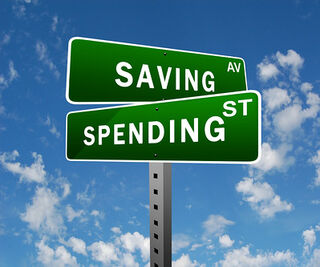
Some people would like to control their tendency to overspend, while others are ready to free themselves from undue frugality.
My Psychology Today article today offers questions and suggestions that should help you achieve your goal. They address both psychological and practical considerations.
Wednesday, March 10, 2021
The Psychology in Spending and Saving

Like most of our important behaviors, how we deal with money has a psychological component. My Psychology Today article today offers thoughts on how to use that in your favor.
Thursday, August 25, 2011
Investing Reinvented
 Especially in these tight times that will likely be with us for the foreseeable future, whatever savings we have should be invested wisely.
Fortunately, it's far easier than financial advisers--who make their money by making us feel we need them--would have us believe.
Even many sophisticated investment advisers agree that the following no-brains-required strategy is likely to, over the long run, yield better results than most investors obtain using strategies that are far more time-consuming, anxiety-provoking, and requiring great expertise or paying a hefty fee to a financial adviser.
1. Keep most of your money in a low-cost, no-load mutual fund. They offer greater potential rewards than a bank CD but with greater risk. One of the best is a Vanguard All-in-One Fund. Those come in different flavors depending on your risk tolerance and how long you plan to keep your money invested.
1a. If you're in the top federal tax bracket (the 35% rate), you might be better off in a tax-managed fund such as the Vanguard Tax-Managed Capital Appreciation Fund or the less aggressive Vanguard Tax-Managed Balanced Fund.
Do not try to time the market. Every time you have an extra $500-$2,500 to invest, do so that day. That way, your money goes to work for you immediately. Also, that automatically buys you more shares when prices are low, fewer when prices are high.
2. Keep an amount equal to six months living expenses in one of the nation's highest yielding bank CDs. How do you find them? Easy: bankrate.com lists them daily. It feels great to see your savings grow. It's like magic--you earn interest on your interest. That's making money without having to do a thing--and with bank CDs, there's essentially no risk, especially if you choose one of the banks with a high safety rating.
2a. If you're in the top federal tax bracket (the 35% rate), you might be better off in a Vanguard tax-exempt bond fund. than in a bank CD.
I believe that all citizens should be taught that model of investing. It would likely result in more net assets for the public, more confidence that it's worth saving for a rainy day, and a greater sense of security, something we could all use in these insecure times.
Disclaimer: I am not a professional investment adviser and thus am NOT giving investment advice here. This merely is a model I've used in my investing. Also, except for the bank CDs, please note that these are uninsured investments and subject to losses. Finally, I am not affiliated with the companies mentioned in this article and have nothing to gain from your investing in them.
Monday, October 6, 2008
Don't Panic: Stay the Course
 In past stock market declines, many people sold stock near the bottom, thereby missing the larger recovery that, heretofore at least, has always occurred.
 No one can accurately predict the stock market's bottom or whether it will recover more than it has lost, but I personally would rather bet on humankind than against it.
So, I will continue to invest in the stock market without trying to time it: Whenever my checking account has five thousand dollars more in it than I need, I invest that in Vanguard Total Stock Market ETF, which offers broad stock diversification at an extremely low fee--0.07% plus the rock-bottom $4-per-trade commission charged by Sharebuilder.
That approach to investing means that over time, I end up owning more shares bought when prices are low than when they're high. And I don't have the stress of trying to do what even most professional investors can't do: time the market and pick individual stocks that will beat the market.
Of course, before investing, everyone should have at least a few months worth of cash reserves in a money market account to allow for emergencies.
I want to be clear: I am not a professional financial advisor, and your individual situation may warrant a different investment strategy than mine, for example, if you need to insulate your money against wide short-term swings. So, it's typically wise to consult a trusted financial advisor, perhaps showing this blog post to him or her.
Subscribe to:
Posts (Atom)

