


Showing posts with label depression. Show all posts
Showing posts with label depression. Show all posts
Saturday, August 9, 2025


Tuesday, May 20, 2025
Saturday, April 26, 2025
Friday, January 10, 2025
Saturday, July 6, 2024
Sunday, January 28, 2024
Sunday, August 6, 2023
Saturday, June 3, 2023
Thursday, September 23, 2021
Should You Accept Life As It Is?

Saturday, September 4, 2021
Are You Thinking About Disengaging From Life?
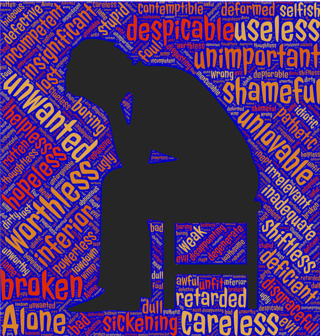
Some people decide they’ve had enough. They're not suicidal. They're just giving up on striving for much of anything. My Psychology Today article today asks some questions.
Friday, April 2, 2021
Are You Usually Sad? Some thoughts

A small percentage of my coaching clients aren’t clinically depressed but are sad, not just situationally sad but have been sad, sober, serious most of their life.
If that describes you or someone you care about, you might find my Psychology Today article today of value.
Saturday, March 5, 2016
The Happy Slitting Party: A Short-Short Story about Depression

Today's offering looks at a person with depression.
Wednesday, February 3, 2016
What's New in Neuropsychology?

I briefly describe the current crop of research findings in my PsychologyToday.com article today.
Tuesday, December 15, 2015
My Advice to a Person With Depression Who Then Got Cancer

Today, I offer advice to a person with depression who then got cancer.
Monday, October 26, 2015
Top Apps for Your Mental Health

Of course, for some people, therapy will be a better choice. But, for cost and convenience alone, in my PsychologyToday.com article today, I describe seven apps and two YouTube channels that deserve a look for anyone dealing with anxiety, depression, addiction, OCD, making or breaking a habit, or suicide. They all incorporate well-established psychological principles and have high user ratings across many reviewers.
Monday, June 15, 2015
Stories of Solitude: A Person With Major Depression

Saturday, February 14, 2015
When You Feel Washed Up: An exploration of what to do when you feel you've been put out to pasture.

Do you feel washed up? Perhaps you’re in your 60s, been “laid
off” and doubt you can ever find another “real” job, but you’re not ready to
retire.
My PsychologyToday.com article today explores what you might do when you feel out-to-pasture.
My PsychologyToday.com article today explores what you might do when you feel out-to-pasture.
Tuesday, February 3, 2015
We're Sadder as a Nation...and How We Might Better Cope

My PsychologyToday.com article today offers explanations for why and probably inadequate suggestions for how to better cope.
Using a Light Therapy Box for Seasonal Depression

Tuesday, October 21, 2014
Beyond SSRIs and Cognitive-Behavioral Therapy: What are other approaches to mild to moderate depression?

Recently on PsychologyToday.com I
interviewed Dr. Thomas Insel, Director of the National Institute of Mental
Health (NIMH).on how to treat depression.
That interview as been gnawing at me ever since. You see,
the advice he gave is pretty much what has been recommended for a decade or
more, that most people with mild to moderate depression are best treated with
an SSRI (like Prozac and Zoloft) and/or cognitive-behavioral therapy (CBT.)
In my admittedly anecdotal experience, having been career
and personal coach to many people with depression, their most common experience
is that the drug yields some benefit, typically taking the edge off their
depression but often, the effect wears off. And the side-effects are often problematic,
for example, sexual dysfunction, flattened affect, nausea, and drowsiness. People
often go off the medication feeling unsure that the benefits outweigh the side
effects
And my clients’ typical experience with cognitive-behavioral
therapy is that it helps but, pardon the pun, it’s no magic pill.
Subscribe to:
Posts (Atom)

