
Showing posts with label substance abuse. Show all posts

Monday, April 28, 2025

Sunday, June 9, 2024

Wednesday, November 17, 2021

Reducing Relapse
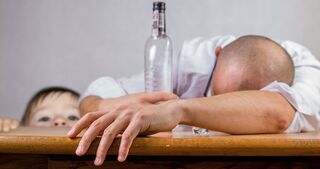
LoritaM, Pixabay, Public Domain

32.3% of people who attempt to stop drinking relapse within one year.

After leaving rehab, 49% of marijuana users relapsed the first day it was available to them.

What happens and what might help reduce relapse?

Tuesday, November 24, 2020

“I’m Worried About My Behavior”

No author listed, pxfuel, Public Domain

Some of my friends, family, and clients, seem unaffected by the COVID restrictions. Indeed, some introverted or work-centric people find it a net positive.

But many other people are getting increasingly distraught, especially in light of the urgings to stay home through the holiday season, and that despite months of social distancing, hand-washing, mask-wearing, closed restaurants and entertainment venues, COVID cases and hospitalizations are soaring, with a record 81,000 Americans hospitalized with COVID, and 253,000 deaths.

My Psychology Today article today presents a composite letter that encapsulates many people’s reactions, plus my response.


Monday, November 9, 2020

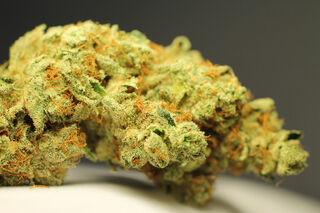
The Latest on Recreational Marijuana: What the science says
No author listed, pxfuel, Public Domain
It’s time for an update on what the science says about marijuana us.  I summarize in my Psychology Today article today. 

Sunday, September 27, 2020

12 Nuggets from Psychology Today’s Essential Reads:On relationships, self-improvement, and substance abuse
James St. John, Creative Commons 2.0, Wikimedia

Twice, I've reviewed Psychology Today’s Essential Reads to find nuggets that might particularly benefit readers of this How to Do Life blog, plus my amplifications. Here's the link to the first and to the second.

Since the previous effort, 900 new Essential Reads have been published. From those, my Psychology Today article today offers 12 nuggets plus my additions.

Tuesday, March 24, 2020

Substance Abuse in the Era of Coronavirus

Adele Morse, CC 4.0

With more time on our hands and more stress in our lives, substance abuse is an increased risk.

As with a headache, the treatment depends on the cause. In my Psychology Today article today, I describe five causes of substance abuse and an approach to each.


Sunday, February 23, 2020

Tough Problems: Aging, substance abuse

My PsychologyToday.com article today is the latest in the Tough Problems series. In each, I present two composite questions that my clients face and my response to each. One of today's is on aging, the other on substance abuse.

Monday, January 6, 2020

Options for Substance Abusers

Substance abusers have a hard time resisting substances' easy short-term feel-good, no matter their long-term liabilities. Perhaps one or more of the ideas in my PsychologyToday.com article today will help.

Friday, November 22, 2019

Distractions: 14 ways to distract yourself from worry or to spend time when you're bored.

Sometimes, there’s reason for worry and nothing we can do about it, at least for now. Then, distraction may be a good alternative. Perhaps you’ll find something sufficiently compelling in the list below.

Or you find yourself bored, perhaps after work or on the weekend. Sure, if you could motivate yourself, you’d get out and exercise, see a friend, work on your novel, but you’re not motivated—You’re in the no-win of feeling bored yet not energized enough to do much.

Worry and/or boredom too often results in drugs or alcohol. It’s so easy—Just open the bottle or pull out the vape pen and you’re not bored anymore; you're blitzed. And if you want some weed, endless billboards tell us to just click and it will materialize at your door.

What to do? Often in writing self-help advice, I feel the need to issue the disclaimer that there are no, ahem, magic pills, but might any of the ideas in my PsychologyToday.com article today be helpful?

Sunday, September 8, 2019

Parents and Substance Abuse

Many teens feel impervious. For example, they may feel they can smoke, vape, and even drive under the influence, and feel like it’s unlikely to hurt them

Risk-taking seems hard-wired, perhaps especially among boys, but to the extent that undue risk-taking can be mitigated, my PsychologyToday.com article today offers some possible approaches.

Friday, February 16, 2018

5 Preachy Pleas

Nobody likes to get preached to but sometimes, in retrospect, we're glad we got the lecture. In my PsychologyToday.com article today, I offer five preachy pleas that I hope are worth your enduring.

Wednesday, May 2, 2012

Do You Have a Substance Abuse Problem? If So, Options for Dealing With It

This is my next column in the Mensa publication, The Intelligencer. I thought you might like an advance look.

Smart people are particularly adept at rationalizing their substance abuse, for example:

"I can handle it."  Are you sure? Have people hinted that you might have a substance abuse problem? And look inward: Is your motivation, drive, and yes, even brainpower, not what it was? Might your substance use be contributing?

"I can stop whenever I want." For how long? Sooner rather than later, are you back off the wagon?

"Drugs or alcohol so help me cope with life that it outweighs substance use's liabilities."  Might you have less misery to cope with if you weren't so often under the influence?

"My life is unalterably miserable, so it doesn't matter if I kill some more brain cells." Most people's lives are alterable. Taking baby steps forward may help but it's hard to take them if you're often high.

"I'm more creative when I'm high." When you evaluate your creative efforts when you're sober, are they really better?

"I'm more likeable when I'm high."  Would your friends and family say that?

"I'm smarter than most people. I have brain cells to spare."  In this job market? With life ever more complicated?

"My kids won't be affected." Do you really believe you're as good a parent when you're under the influence? And we all know that kids imitate their parents, so it's likely that your kids will follow in your substance-abusing footsteps. Is that okay with you?

The most frequent rationalization: "I must satisfy my urge to feel good right now."  Really? Must you? And is there no better, less side-effect-ridden way to feel good than to get drunk or high?

As a former drug counselor and now a career and personal coach for 26 years, having worked with 3,900 clients, I have so often seen substance abuse damage people's careers and personal lives. Even a high IQ may not be enough to compensate. Sure, most Mensans have enough brainpower to avoid being permanently unemployable, but many admit that drugs or alcohol have made them so much less successful and happy than they otherwise could have been. Yet most of them can't kick the addiction for good.

How to know if you have a problem? So many people with a substance abuse problem claim they don't have one. Take a step back and think about the complications that substance use has brought into your life. It may also be helpful to ask those who care about you for candid feedback on your use of drugs or alcohol.

The following offer reasonable prospects for getting clean and sober. One size does not fit all, but I'm hoping you'll find at least one suggestion on this list that is worth trying. If necessary, treatment should also address your mental and physical health concerns.

Moderation? Some people can be functional alcohol/drug users--if they have the discipline to keep it moderate. Others cannot function well-enough with even modest drug/alcohol use.

12-Step programs.  These programs, for example, Alcoholics Anonymous and Drug Addicts Anonymous tend to work better for people of faith or who prefer a treatment that addresses emotions as well as the rational. To find a 12-step program for yourself or someone you care about: http://en.wikipedia.org/wiki/List_of_twelve-step_groups.

Cognitive behavioral therapy helps correcting people erroneous thinking such as those rationalizations listed above. It also includes teaching the person abuse-prevention skills, for example, having a scripted response to, "Would you like a drink or a joint?" "No, I've had enough." or, "I'll have to drive," whatever. To find a non-12-step self-help group, you might try SmartRecovery: www.smartrecovery.org.

Medication? A physician can prescribe a medication that often is very effective in helping you stop your abuse. Such pharmacotherapy can be particularly effective when someone you're living with starts each day by thanking you for committing to being clean and sober that day, then gives you the pill and a hug.

Picture how your life would be better? Keep front-and-center the ways your life would be better if you stopped, and the price you've paid for your substance abuse. San Francisco cognitive-behavioral therapist, Dr. Michael Edelstein recommends going further: "Five times daily, without fail, vividly read and write the pros and cons of kicking. Don't stop this discipline when you're doing better."

Can a relationship help? Sometimes, a partner's help is the most effective. If your partner has a substance abuse problem, yes be a good listener, yes praise their strengths, and don't be an enabler. For example, don't do their work for them to keep them propped up. They do need to experience the consequences of their abuse.

Some people stop only because of a relationship: for example, they fall in love, get pregnant, or their sibling stopped using drugs and the person didn't want to be the only family member with a substance abuse problem. 

Do you have to hit rock bottom? Alas, some people stop only when they've hit rock bottom: They're so exhausted from the toll of living the addict lifestyle that they just are sick and tired of being sick and tired. Edelstein urges, "Refuse to give up. You can succeed on the 100th try."

Is there a better way to derive pleasure? At the risk of sounding like a goody two-shoes, there really are ways to get high on life without drugs. For example, I get real pleasure from helping my clients, writing, hosting my radio show, playing in the garden, my wife and I having a couple over for dinner, walking my doggie, Einstein, indeed in writing this column. How could you fill your life with enjoyable activities that don't have negative side effects?
 

blogger templates | Make Money Online