


Showing posts with label feedback. Show all posts
Showing posts with label feedback. Show all posts
Wednesday, March 12, 2025


Thursday, September 12, 2019
You're Rejected and Don't Know Why

You ask someone out. The response? An unhelpful, “I don’t think we’re a good fit.”
You’re fired or your job application is rejected. You ask why and all you get is a vague answer like, “We decided to go in a different direction.”
And some people go through life largely rejected and rarely get any useful feedback as to why.
What to do?
You have no choice but to self-assess, and that may be for the best.
My PsychologyToday.com article today asks you some questions to help with that self-assessment.
Sunday, February 21, 2016

Saturday, October 31, 2015
Getting and Giving More Feedback

In my PsychologyToday.com article today, I offer ways to make getting and giving feedback easier and more valid.
Tuesday, December 30, 2014
Should You Say Something Negative?

My PsychologyToday.com article today presents an internal debate that may help you decide when to speak up and how.
Thursday, May 15, 2014
How I Became A Writer: An improbable story embedding both writing tips and life lessons

Today, a client said he was worried he couldn't become a good enough writer even to write reports as a data analyst. I decided to tell him the improbable story of how I became a writer.
After, he said it not only taught him lessons on writing but on life. So I decided to write up that story as my PsychologyToday.com article today. HERE is the link.
Tuesday, September 11, 2012
A Case for Candor
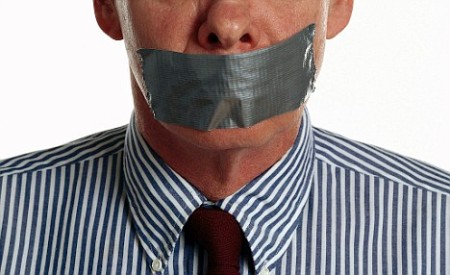
So many people wonder why they were "laid off," not hired,or unsuccessful in romance. And don't we all wish our politicians were more candid with us?
And might not America be more successful in competing in the global economy if employers and co-workers gave more candid feedback?
Yes, criticism hurts but would we not be better off, as individuals and as a society, if our friends, bosses, and leaders gave us honest feedback, positive and negative?
And when we get criticized, if, after the unavoidable reflexive sadness or anger, instead of wallowing or lashing back, we forced ourselves to fairly assess if the criticism is deserved and worth the effort to try to improve, and if so, fighting to improve?
Perhaps in urging more candor, I'm being unrealistic--most people don't want to give nor get more feedback.
Saturday, September 11, 2010
A Few Advanced Communication Techniques
 I'm writing a book called, How to Do Life. Here's an advance look at a few of the book's many tips on communication.
Early on, be just mildly nice. Make them earn your niceness. They'll value you more. Corollary: An occasional glare may have more influence than a smile.
Be in the sweet-spot of enthusiasm. Don't be too flat, of course, but don't be too enthusiastic or you'll sound desperate or out of control. Remember when Howard Dean was the leading candidate for the 2004 presidency until, in his speech after the Iowa primary, he yelled what seemed like a war whoop. That single moment took him out of the running.
Consciously decide how much to bolster your conversation partner's self-esteem. Usually, it's wise to say things that preserve or boost your conversation partner's self-esteem.
But occasionally, it's more effective to shake a person up, even deliberately showing controlled anger. For example, if a coworker is habitually lazy yet complacent, it may, in the right circumstance be wise to firmly, with a hint of anger say, "Would you mind if I give you some candid feedback?" They'll usually say yes. Then say,
"I'm feeling increasingly frustrated that you're not holding up your end. I'm having to cover for you and even when I'm, not, the quality and quantity of work getting done just isn't good. I don't want a response now. I just want you to think about it. Come talk with me tomorrow. "Caution: Showing unbridled anger will be less likely to get the person to consider your feedback and more likely to just write you off as a hothead.
Be low-maintenance. In today's ever more pressured workplace, it is critical that you're seen as low-maintenance. Here are a couple of non-obvious ways to be so:
Think twice before offering unasked-for suggestions. Why might that make you seem high-maintenance? Even if your suggestion is good, your overwhelmed boss doesn't want to take on any more and so may feel guilty or embarrassed if he doesn't do it. Or if he does do it, you've added to his overwhelm. The best question you can ask a boss: "Is there anything I can do for you?" Be the antidote to a boss being overwhelmed.
Tone down your "I'm offended" antenna. Be sure that your being slighted isn't a slight that's too slight to insist that you need to "process your feelings" about it.
Wednesday, June 10, 2009
Just Because They're Emotional Doesn't Mean They're Wrong
 I've had many clients and callers to my shows, say things like: "My boss yells at me all the time. How do I stop that abuse?"
Of course, no one should be required to endure frequent yelling but poor delivery doesn't mean the dissatisfaction is unjustified.
If a boss or coworker is frequently dissatisfied with you (whether expressed calmly or forcefully,) separate the message from the messenger. Be honest with yourself: Are you as competent, hard-working, and pleasant to be around as you should be?
Not sure? Ask for anonymous feedback from co-workers, supervisors, customers, vendors, even family. As mentioned in an earlier post, www.checkster.com makes that easy to obtain.
Subscribe to:
Posts (Atom)

