


Showing posts with label charitable giving. Show all posts
Showing posts with label charitable giving. Show all posts
Saturday, October 25, 2025


Thursday, May 8, 2025
Tuesday, December 3, 2024
Sunday, October 6, 2024
Sunday, September 29, 2024
Sunday, July 21, 2024
Sunday, January 14, 2024
Saturday, January 7, 2023
Tuesday, January 3, 2023
Wednesday, December 28, 2022
Monday, November 28, 2022
Tuesday, November 24, 2020
Instead of Giving Presents: Ideas for holiday charitable giving

If you’re at that point now, consider making charitable donations in
the names of the people on your gift list, or directly to needy people,
even if not tax-deductible. I offer suggestions on how to wisely do that in my Psychology Today article today.
Sunday, July 5, 2020
In Praise of Charity That's NOT Tax-Deductible

Thursday, August 4, 2016
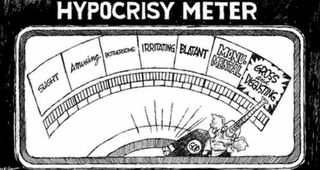
The Ultimate Hypocrites: Ultra-Wealthy Donors
Wednesday, May 13, 2015
A Workover: "What Should I Do?"

The transcript of our exchange is my PsychologyToday.com article today.
Wednesday, April 8, 2015
Tips on Wise Charitable Giving

That may be true even for you and me who don't have anywhere near as much to give away. My PsychologyToday.com article today offers tips on getting the most bang and personal satisfaction from your charity dollars
Monday, February 9, 2015
Aging Well: A practical guide to the not-so golden years

I’ve written many
posts on aging and thought you might find it helpful if I synthesized their
most important advice in one place. That's what I've done in today's PsychologyToday.com article.
Friday, August 1, 2014
Thoughts On Aging, Dying, and Legacy

Thoughts About Aging, Dying, and Legacy
My mom died recently, which triggered thoughts about aging,
dying, and legacy. Here are some of them.
Make each heartbeat
count. When your second parent dies,
it makes too clear that you’re moving toward the end of life’s conveyer belt. Most
older people decide to play more, work less. But consider
Francis Crick, co-discoverer of the genomic double helix who worked in his
hospital bed on the day he died of cancer. Similarly, Isaac Asimov had written
450 books and was asked, “If you had six months to live, what would you do?” His
answer: Type faster.
Indeed, a surprising number of people would rather
work until the end. You might ask why? Imagine there were two clones of you,
both with months left to live. One mainly played golf and video games. The
other mainly did the most societally beneficial work possible: continuing on
the job, mentoring, writing a helpful blog, etc. Obviously, the latter’s life
was more meaningful.
Give wisely. Donate
to a charity where dollars have big ripple effects, for example, a nonprofit serving needy gifted kids such as Supporting the Emotional Needs of Gifted
(SENG.) As Mensans know, high-IQ people have great but sometimes unrealized
potential to make a difference in the world.
Check out this
New York Times article for more guidance
on how to give wisely.
Think three times
before retiring. Yes, some people love retirement but many don’t. They’re
bored, feel useless, and have difficulty spending so much time with their spouse. They
may also outlive their retirement. You can always retire later but once you
retire, it’s like the Roach Motel: You can check in but you can’t check out.
Forgive yourself. Most people, as they get older, decline
physically and mentally. For example, they may develop a case of CRS: can’t
remember stuff. Forgive yourself. Your decline is usually compensated for by
your experience and, ideally, wisdom.
Have a bulletproof
will or trust. When money is at stake, some seemingly nice people will try
to overturn a will. You might start with a do-it-yourself one, for example, using
WillmakerPlus,
but get it bulletproofed by an estate lawyer.
Have an advance
medical directive. Dying is rarely much fun. If you’re in agony and fed with a feeding tube, do you really want extraordinary measures taken to
keep you alive? Without an advanced medical directive, that’s what they’ll do.
My mom had such a directive, and when things got bad, we put her in in-home
hospice: She could live out her days at home and a nurse visited her regularly
to be sure she was comfortable but they didn’t do any probing, painful
procedures to extend what was already a very poor-quality life.
Make sure your will and advance medical directive are in the
hands of someone you trust who’ll know when you’re incapacitated or dead.
Plan your burial. Many people get conservative when it comes
to dying: have a separate ceremony at a funeral home and another at the
gravesite. Usually expensive and unnecessary. Preplan and you’ll avoid your next
of kin having to, while in grief’s throes, withstanding a funeral home
salesperson pitching you a fancy funeral: “You wouldn’t want to be cheap with
your mother, now would you?” Your funeral’s value is determined by the warmth
of the ceremony and celebration of your life, not on how much is spent on the
funeral. My wife, when she dies, after direct
burial at the cemetery, wants the attendees to come back to our house for a
brief celebration of her life over food, drink and ‘50s music.
Dying well. We still don’t allow people to decide when to
die. That strikes me as a terribly unfair intrusion of government into one of
our most personal decisions. Fortunately, some physicians will give a
terminally ill person a final cocktail of tranquilizers and sleeping pills. And
if you can't access such a physician, a right-to-die orgnization, Final Exit Network,
makes available the most comfortable ways to go.
Marty Nemko's bio is in Wikipedia
Monday, June 23, 2014
Pleasurable Philanthopy: The Art of Charitable Giving

Wednesday, May 7, 2014
What I Learned From Giving Money Away: A case for giving charity to individuals, not non-profits

My PsychologyToday.com article today talks about how I gave money away to strangers and my wondering whether, despite losing the tax deduction, it's wiser to give money to individuals than to non-profits. HERE is the link.
Subscribe to:
Posts (Atom)

